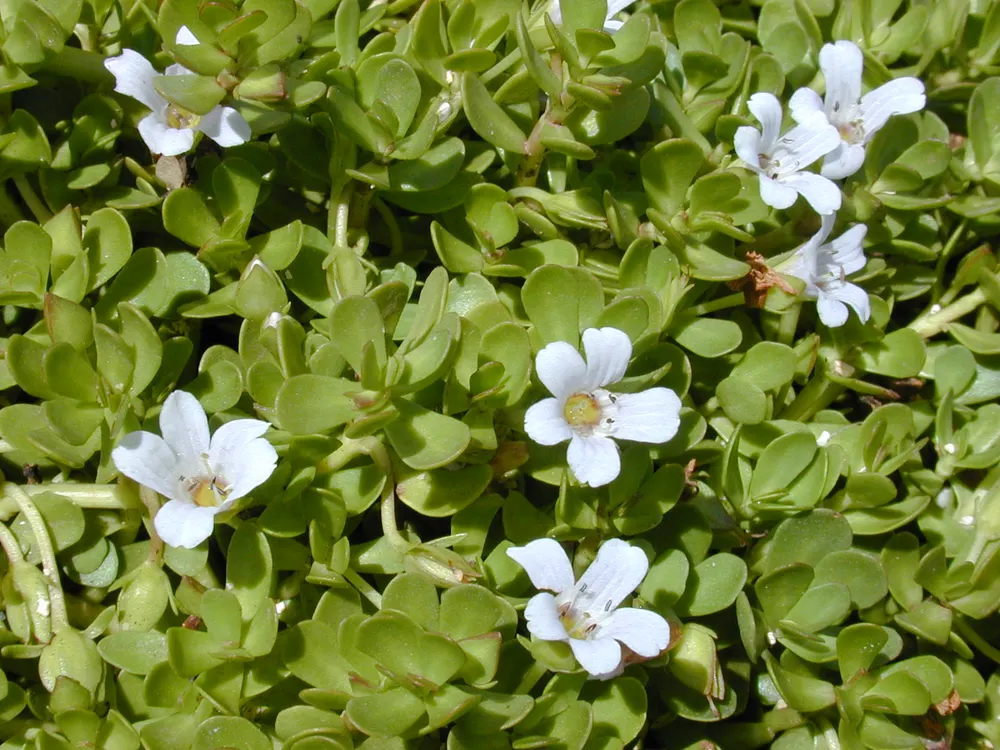
Photo: Forest & Kim Starr, CC BY 3.0 (via Wikimedia Commons)
Brahmi (Water Hyssop)
Bacopa monnieri
Also known as Brahmi, Water Hyssop, Herb of Grace, Bacopa, Thyme-leafed Gratiola
Key benefits
✦Traditional uses
✦In Ayurvedic medicine, brahmi has been treasured for more than three thousand years as a rasayana, a rejuvenating herb believed to sharpen the mind and steady the spirit. Its very name honors Brahma, the Hindu god of creation, and old accounts describe Vedic scholars chewing its leaves to help commit long hymns and scriptures to memory. Village healers across South Asia also turned to brahmi-infused oils for tired, restless minds and for children slow to find their words. It moved from temple gardens and monastery courtyards into everyday household medicine, where a simple leaf tea remains one of the most familiar ways it is taken today.
Growing guide
✦Fresh to dried
✦Traditional preparations
✦Brahmi Leaf Tea
The classic, gentle way brahmi has traditionally been taken to support quiet focus and calm.
How it's made. Traditionally, a tea is made by steeping 1 teaspoon of the dried leaf in 250 ml of just-boiled water, covered, for 10 minutes, then strained. It is traditionally sipped once daily.
Brahmi Honey Infusion
A simple household remedy pairing brahmi's traditional calming reputation with honey's soothing warmth.
How it's made. Traditionally, a small pinch (about 1/4 teaspoon) of dried, powdered brahmi leaf is stirred into a spoonful of warm honey and taken once in the morning.
- ✦Gotu Kola
- ✦Ashwagandha
- ✦Holy Basil (Tulsi)
- ✦Gotu Kola
- ✦Ginkgo
“When your thoughts feel scattered and you long for the quiet clarity of a still pond at dawn.”
Brahmi is often confused with gotu kola (Centella asiatica) because both are low, water-loving herbs prized in traditional memory tonics, but they are entirely different plants from different families, so old texts and modern shelves sometimes mix up their names.
Higher doses can cause nausea, cramping, dry mouth, or fatigue. It may interact with thyroid medication, sedatives, and other central nervous system drugs, and is best avoided in pregnancy and breastfeeding due to insufficient safety data.