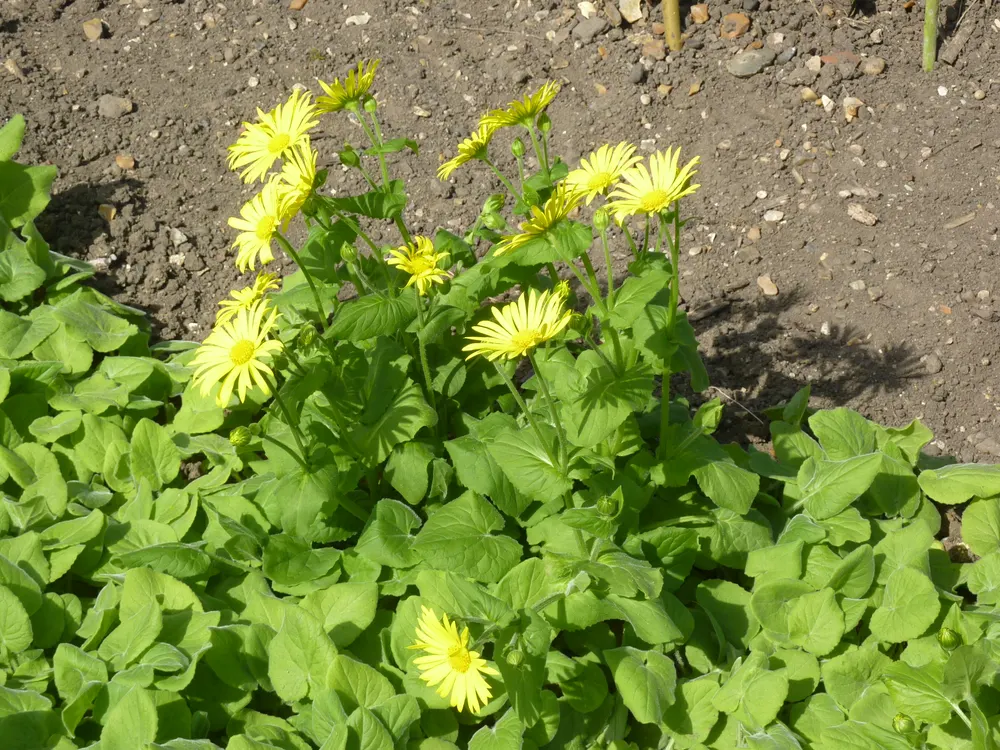
Photo: Magnus Manske, CC BY-SA 3.0 (via Wikimedia Commons)
Leopard's Bane
Doronicum pardalianches
Also known as Great Leopard's-bane, False Leopard's-bane, Leopardsbane
Key benefits
✦Traditional uses
✦Long before it settled into cottage gardens, Doronicum pardalianches had a fearsome reputation. Old herbals, including Gerard's sixteenth century Herball, describe hunters mixing the pounded root with meat as bait to poison leopards and wolves, which is where the plant earned its grim Latin name. That story followed it into folk memory even as gardeners came to prize it for a gentler reason: its cheerful yellow, daisy-like flowers were some of the first tall blooms to open in a shaded border each spring. It has never held a place in the kitchen or the medicine chest, and its story has always belonged to the garden and to old herbal lore rather than to any traditional remedy.
How to grow & use it
✦The full apothecary for Leopard's Bane
Traditional remedies and step-by-step preparations, a complete growing guide, and how to harvest, dry, and store it, all unlocked with HerbLens Unlimited.
- ✦Remedies & preparations
- ✦ Growing guide
- ✦Harvest & storage
From under $6 a month. Free plant identifications always included.
- ✦Hellebores (Helleborus spp.)
- ✦Siberian bugloss (Brunnera macrophylla)
- ✦Woodland ferns
- ✦Marsh marigold (Caltha palustris) for safe bright yellow spring color
- ✦Calendula (Calendula officinalis) for a true, traditionally used golden bloom
“For the shaded corner that wakes early and wants gold before anything else dares to bloom.”
The plant's Latin epithet, pardalianches, literally means 'leopard strangler.' Renaissance herbalists genuinely believed its root, laced into meat, could bring down a leopard, which is how a shade-loving spring daisy ended up with one of the fiercest names in the garden.
Doronicum pardalianches carries its warning right in its own name. "Pardalianches" comes from the Greek and Latin for "leopard strangler," a name old herbalists gave it because the root was historically used as poisoned bait to kill leopards, panthers, and wolves. It is not considered a food or tea herb, and like many members of the daisy family it can cause skin irritation or an allergic rash on contact, especially for anyone sensitive to ragweed, chrysanthemums, or marigolds. It should never be eaten, and it should be kept well away from children, pets, and grazing animals. This entry is for identification and garden reference only. If you suspect any part of this plant has been swallowed, contact a poison control center or a qualified medical professional right away rather than treating it at home.