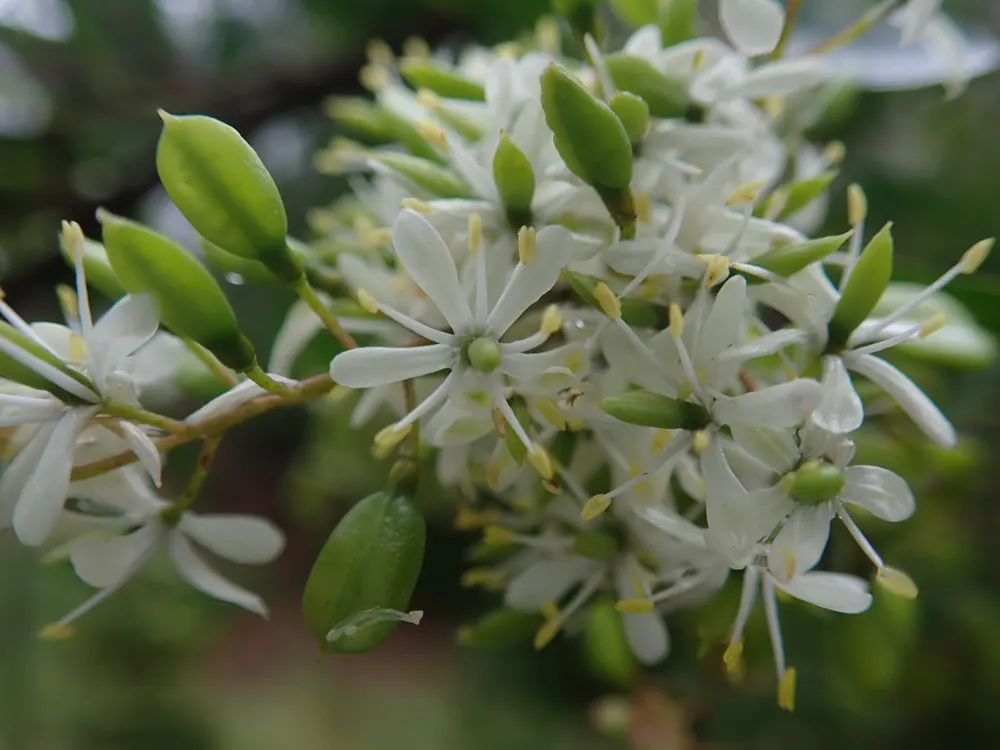
Photo: Margaret Donald, CC BY-SA 2.0 (via Wikimedia Commons)
Sweet Bursaria
Bursaria spinosa
Also known as Native Blackthorn, Christmas Bush, Prickly Box, Bursaria
Key benefits
✦Traditional uses
✦Sweet Bursaria has never been a kitchen or apothecary herb, but it has long earned its keep in other ways. Its dense, spiny growth made it a natural boundary hedge and stock-deterrent shrub for early settlers, while its close-grained timber was valued by Aboriginal communities across its range for small tools and implements. Beekeepers have prized it for generations, since its cream, star-shaped flowers pour out a sweet, honeyed scent in midsummer and draw bees in from every direction. In more recent decades it has become famous for a different reason entirely, as the single plant an endangered Australian butterfly cannot live without.
How to grow & use it
✦The full apothecary for Sweet Bursaria
Traditional remedies and step-by-step preparations, a complete growing guide, and how to harvest, dry, and store it, all unlocked with HerbLens Unlimited.
- ✦Remedies & preparations
- ✦ Growing guide
- ✦Harvest & storage
From under $6 a month. Free plant identifications always included.
- ✦Correa
- ✦Grevillea
- ✦Westringia (Native Rosemary)
- ✦Westringia (Native Rosemary)
- ✦Lilly Pilly (Syzygium)
“For the corner of the garden that asks for almost nothing and gives back a whole summer's hum of bees and butterflies.”
In the woodlands around Melbourne, the rare Eltham Copper butterfly cannot complete its life cycle without Sweet Bursaria. Its caterpillars shelter by day in tunnels dug by small Notoncus ants at the base of the shrub, then climb up after dark to feed on its leaves, tended and protected by the very ants that share their home.
Sweet bursaria is not used as food or medicine; its branches are genuinely spiny, so wear gloves when pruning or handling cut stems.