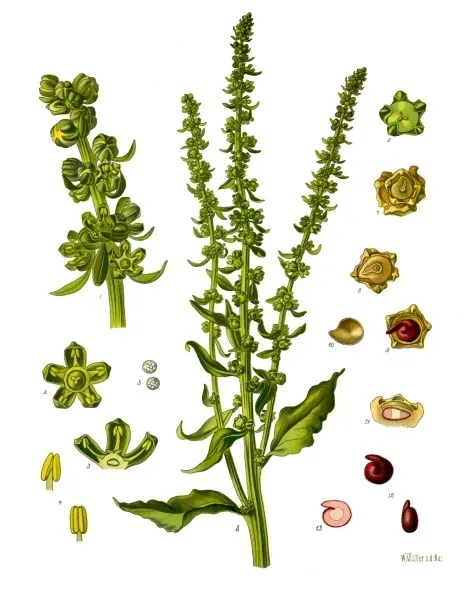
Photo: Walther Otto Müller, Public domain (via Wikimedia Commons)
Beet
Beta vulgaris
Also known as Beetroot, Garden Beet, Table Beet, Red Beet
Key benefits
✦Traditional uses
✦Long before it colored borscht and salads, the beet was prized by the ancient Greeks, who are said to have offered it to Apollo at Delphi, and by Roman households, who used it as both food and folk remedy for fevers and constipation. Across medieval and Eastern European kitchens, beets and their juice became a trusted blood-building tonic, given to the weary and the anemic to restore color and vigor. Beet kvass, a fermented beet drink, carries this tradition forward as a folk digestive and liver tonic still made in Slavic and Russian households today. The whole plant, root and leaf alike, has always been treated as both food and medicine, rarely separated in the old kitchen gardens.
Growing guide
✦Fresh to dried
✦Traditional preparations
✦Beetroot Tonic Juice
A traditional folk preparation valued in European and Ayurvedic home remedies for supporting stamina and healthy circulation, taken in small amounts rather than by the glassful.
How it's made. Traditionally, one small raw beetroot, about the size of a golf ball, is juiced and diluted with an equal part of water, then taken a few tablespoons at a time.
Beet Kvass
A lightly fermented beet tonic long used in Eastern European households as a digestive and liver-supporting folk remedy, taken in small daily servings rather than as a beverage.
How it's made. Traditionally made by submerging chopped beets in lightly salted water and letting the mixture ferment at room temperature for 3 to 5 days, then straining and sipping about a small glass, roughly 60 ml, as a tonic.
- ✦Ginger
- ✦Dandelion root
- ✦Carrot
- ✦Carrot (for cooking body and sweetness)
- ✦Swiss chard (for the leafy greens, being the same species)
“When you want to nourish the blood, warm a winter table, and bring earthy sweetness to both plate and pantry.”
Swiss chard and the garden beet are, botanically speaking, the very same species, Beta vulgaris. Centuries of selective breeding simply favored one wild ancestor's leaves in one direction and its root in the other.
Beets are a safe everyday food, though the greens and root are high in oxalates, so those prone to kidney stones should eat them in moderation. Beets are also high in nitrates, so people on nitrate or blood pressure medication should be mindful of large amounts, and pink urine or stool after eating beets is a harmless, common genetic trait.