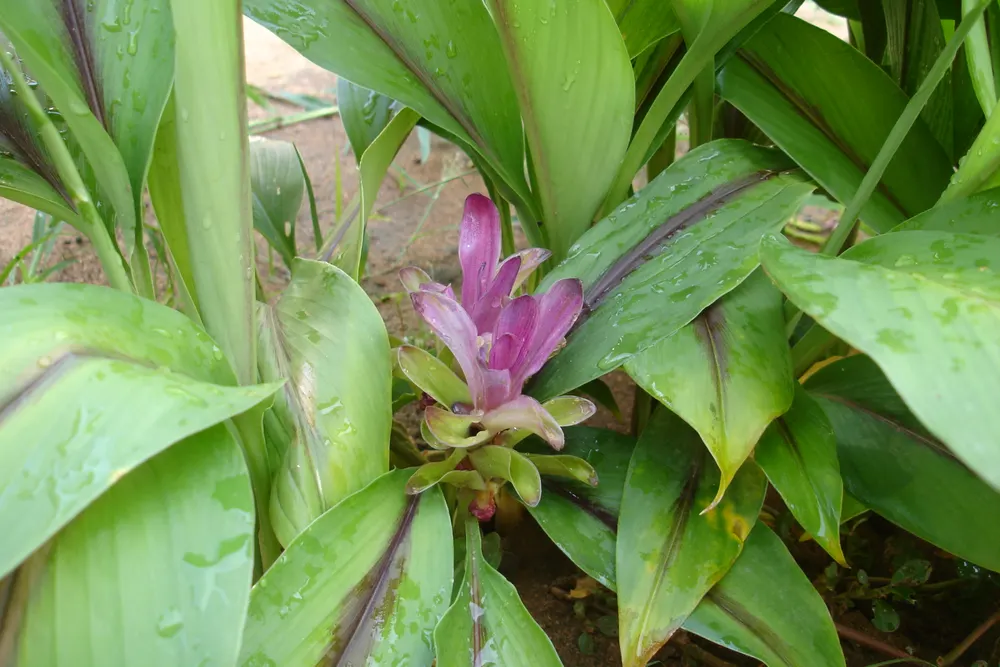
Photo: B.Ramesh Raju, Redaloes (talk) (Uploads), Public domain (via Wikimedia Commons)
Black Turmeric
Curcuma caesia
Also known as Kali Haldi, Black Zedoary, Karpoora Haridra
Key benefits
✦Traditional uses
✦Cut open a black turmeric rhizome and you find something startling: flesh the color of a bruised evening sky, deep blue-black or slate-violet, camphor-scented, utterly unlike the sunny orange root sold as everyday turmeric. Tribal and Ayurvedic healers across central and northeastern India have long prized this rarer cousin, working the fresh rhizome into pastes for wounds, sprains, and snakebite, and into small honeyed preparations meant to ease coughs and labored breathing. Beyond the medicine chest, black turmeric carried a second life as a guardian herb, kept in homes, tucked into pockets, or hung above doorways in the belief that it warded off evil eye and misfortune. That dual identity, part remedy and part talisman, has made it one of the most quietly revered roots in the Indian herbal tradition.
How to grow & use it
✦The full apothecary for Black Turmeric
Traditional remedies and step-by-step preparations, a complete growing guide, and how to harvest, dry, and store it, all unlocked with HerbLens Unlimited.
- ✦Remedies & preparations
- ✦ Growing guide
- ✦Harvest & storage
From under $6 a month. Free plant identifications always included.
- ✦Ginger
- ✦Common turmeric
- ✦Holy basil (tulsi)
- ✦Common turmeric (Curcuma longa)
- ✦White zedoary (Curcuma zedoaria)
“For the root that heals quietly and guards the door.”
In parts of Madhya Pradesh, black turmeric rhizomes have historically fetched far higher prices than gold by weight at herb markets like Chitrakoot, sought after by traditional healers and tantric practitioners for its believed protective power.
Black turmeric is not the everyday culinary spice and shouldn't be substituted for common turmeric in large amounts. It may interact with blood-thinning medication, and it's best avoided during pregnancy and breastfeeding and kept away from children.