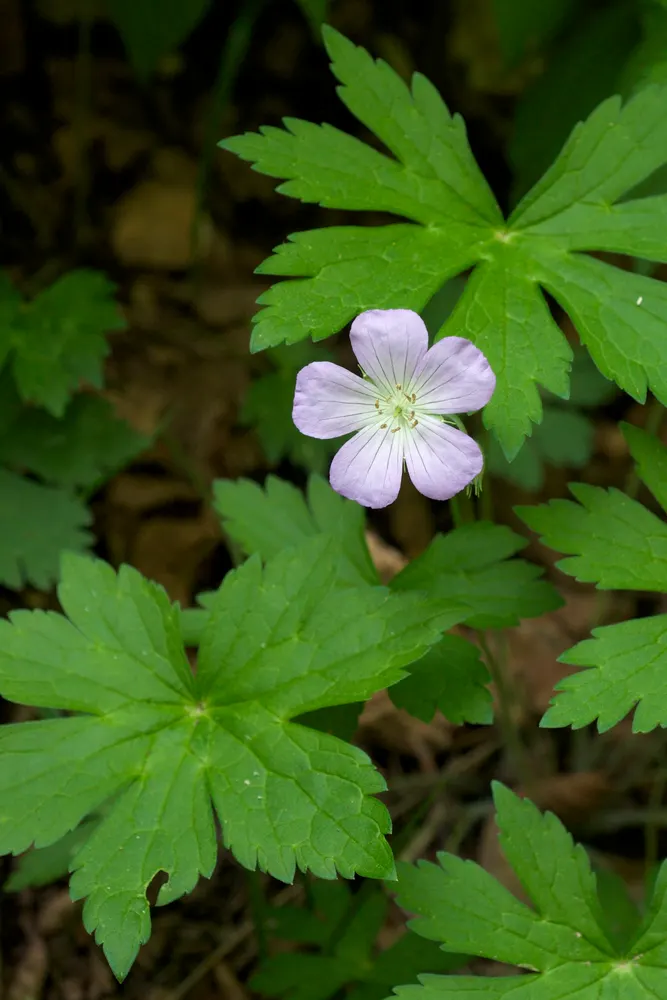
Photo: Eric in SF, CC BY-SA 3.0 (via Wikimedia Commons)
Wild Geranium
Geranium maculatum
Also known as Spotted Cranesbill, Alum Root, Wild Cranesbill, Crowfoot, Chocolate Flower
Key benefits
✦Traditional uses
✦Long before it graced shade gardens, wild geranium was a trusted astringent in the medicine bundles of many Native American nations, including the Cherokee, Iroquois, and Chippewa, who dug its knotty rootstock to treat wounds, sore mouths, and digestive upset. Its high tannin content made the dried root a practical styptic, packed onto cuts and bleeding gums to help draw tissue closed. Early American physicians took note of these uses too, and the powdered root found its way into eclectic medicine cabinets well into the 1900s, prized simply for being reliably astringent and gentle. Today it remains a quiet, unglamorous helper, valued more for what it steadies than for what it stimulates.
How to grow & use it
✦The full apothecary for Wild Geranium
Traditional remedies and step-by-step preparations, a complete growing guide, and how to harvest, dry, and store it, all unlocked with HerbLens Unlimited.
- ✦Remedies & preparations
- ✦ Growing guide
- ✦Harvest & storage
From under $6 a month. Free plant identifications always included.
- ✦Chamomile
- ✦Marshmallow root
- ✦Yarrow
- ✦Cranesbill (related Geranium species)
- ✦Bayberry root bark
“For the quiet, steadying kind of help, the sort a woodland elder might have offered without fuss.”
Wild geranium's seed pods snap open with such force when ripe that they can fling seeds several feet from the parent plant, a trick that earned the whole genus its old nickname, cranesbill, for the pod's slender, beaklike shape before it springs.
Wild geranium is generally safe in modest amounts, but its high tannin content can cause constipation if overused. Tannins also bind to iron and some medications, so avoid taking it alongside iron supplements or other oral medicines, and its safety in pregnancy and breastfeeding isn't established.