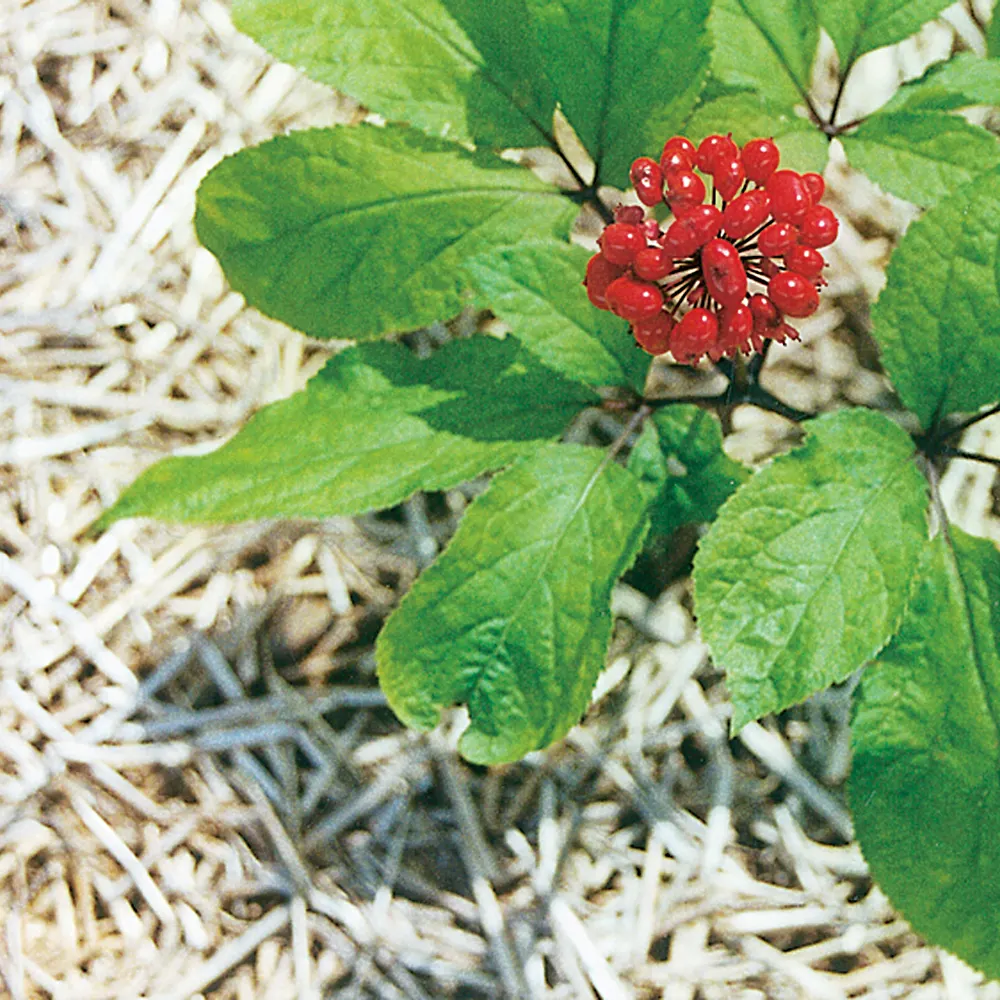
Photo: FloraFarm GmbH / Katharina Lohrie, CC BY 3.0 (via Wikimedia Commons)
Ginseng
Panax ginseng
Also known as Asian ginseng, Korean ginseng, Chinese ginseng, True ginseng, Ren shen
Key benefits
✦Traditional uses
✦Ginseng has been prized in East Asian medicine for well over two thousand years, so central to Chinese and Korean healing traditions that its very name, ren shen, means man root, a nod to the way a mature root's forked shape can resemble a small human figure. It was traditionally reserved as a tonic for emperors and the wealthy, given to restore depleted qi, steady the body through illness or old age, and build resilience against fatigue and stress. Root diggers in the mountains of Manchuria and Korea considered a large wild root a treasure worth a small fortune, and the plant traveled along trade routes as one of the most valued botanicals in the world. Today it remains a cornerstone of traditional Chinese and Korean herbal practice, often taken as a seasonal tonic rather than a quick fix.
How to grow & use it
✦The full apothecary for Ginseng
Traditional remedies and step-by-step preparations, a complete growing guide, and how to harvest, dry, and store it, all unlocked with HerbLens Unlimited.
- ✦Remedies & preparations
- ✦ Growing guide
- ✦Harvest & storage
From under $6 a month. Free plant identifications always included.
- ✦Licorice root
- ✦Astragalus
- ✦Ginger
- ✦American ginseng (Panax quinquefolius)
- ✦Eleuthero (Siberian ginseng)
“For steady, old-world support when you want to feel fortified rather than jolted.”
The genus name Panax comes from the same Greek root as panacea, meaning all-healing, a name early botanists gave the plant because of how broadly it was used in traditional medicine.
Can interact with blood thinners, diabetes medications, MAOIs, and stimulants, sometimes causing insomnia or a racing heart. Avoid during pregnancy and breastfeeding.