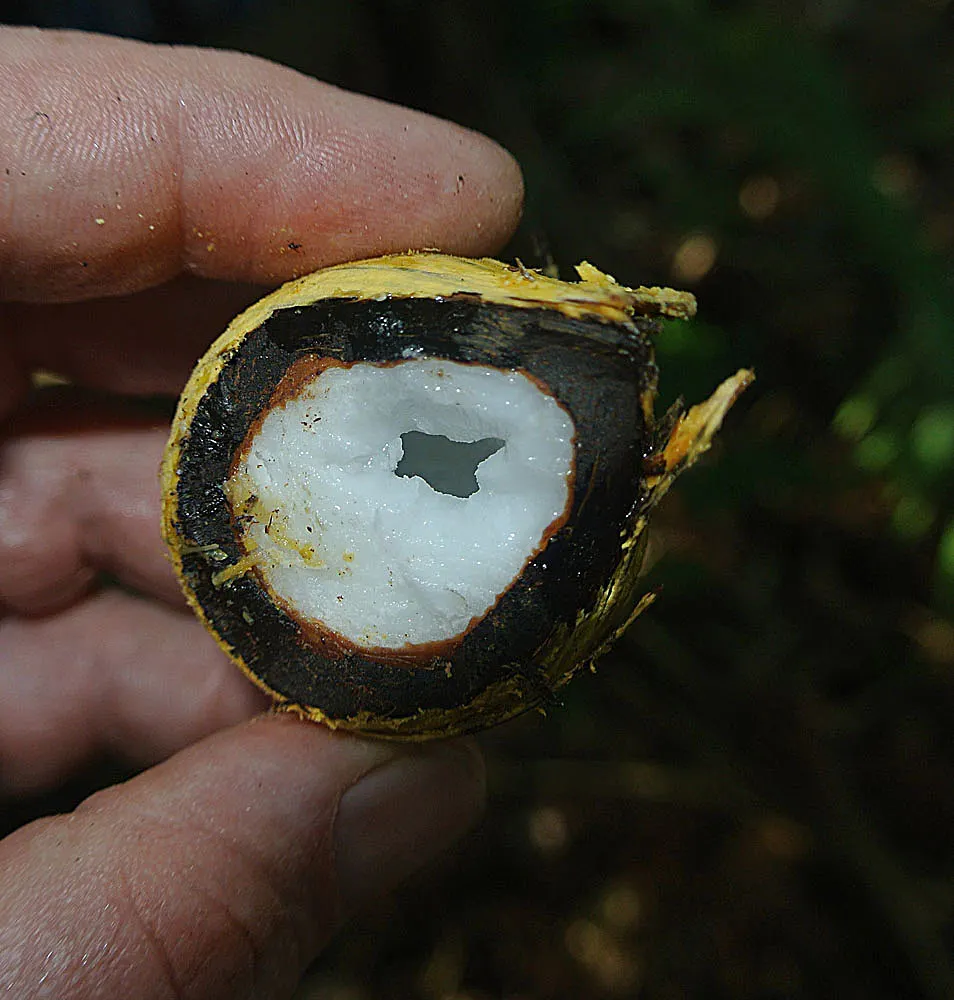
Photo: Dick Culbert from Gibsons, B.C., Canada, CC BY 2.0 (via Wikimedia Commons)
Jacaratiá (Wild Papaya)
Jacaratia digitata
Also known as Yacaratiá, Jacaratiá, Bonete, Mamón de monte, Wild papaya
Key benefits
✦Traditional uses
✦Deep in the dry forests of the Gran Chaco and the Paraná river basin, jacaratiá has long been treasured by Guaraní and criollo communities across Argentina, Paraguay, Bolivia, and Brazil as one of the few fruit trees still bearing food through the harshest dry months. Its swollen, water-storing trunk made it something of a lifeline for travelers and livestock when little else in the forest was green, and the ripe fruit was eaten straight from the tree or simmered slowly into the deep amber preserve still known today as dulce de yacaratiá. The milky latex of the unripe fruit and stem, much like that of its papaya cousin, was traditionally rubbed onto tough cuts of meat to tenderize them, and in some folk traditions was used with great caution as a digestive aid, though its caustic nature meant it was handled carefully and sparingly. Even where it has never been formally cultivated, jacaratiá is remembered fondly as a generous tree that quietly fed people and animals when the dry forest offered almost nothing else.
How to grow & use it
✦The full apothecary for Jacaratiá (Wild Papaya)
Traditional remedies and step-by-step preparations, a complete growing guide, and how to harvest, dry, and store it, all unlocked with HerbLens Unlimited.
- ✦Remedies & preparations
- ✦ Growing guide
- ✦Harvest & storage
From under $6 a month. Free plant identifications always included.
- ✦Cinnamon
- ✦Clove
- ✦Citrus peel
- ✦Ripe papaya (Carica papaya)
- ✦Guava
“For the memory of a dry forest that turned scarcity into something sweet.”
The jacaratiá's oddly swollen, pale trunk is not just for show, it acts like a living water tank, letting the tree survive months of Chaco drought that would kill most other fruiting trees outright, which is exactly why thirsty travelers and herders once relied on it.
The milky latex in the unripe fruit, stem, and trunk is caustic and irritating, and shouldn't be taken internally without proper traditional preparation. Like papaya, it can trigger reactions in people with a latex allergy, and traditional communities avoid the unripe fruit and latex during pregnancy.