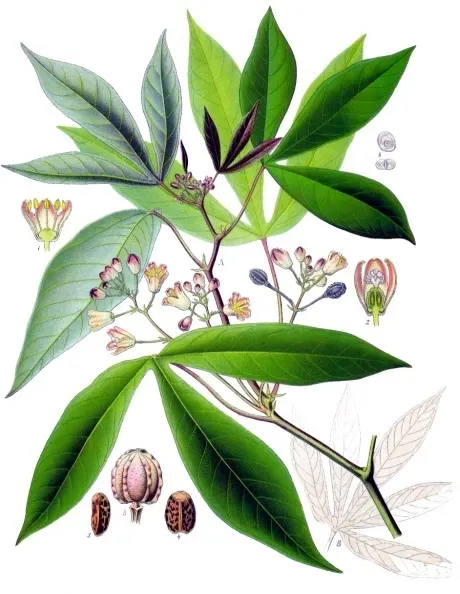
Photo: Franz Eugen Köhler, Köhlers Medizinal-Pflanzen, Public domain (via Wikimedia Commons)
Cassava
Manihot esculenta
Also known as Manioc, Yuca, Tapioca root, Mandioca, Garri (as processed flour)
Key benefits
✦Traditional uses
✦Cassava has fed people longer than almost any other root in the Americas, first domesticated by indigenous farmers in the Amazon basin thousands of years ago and carried by them across the tropics long before European contact. Portuguese traders later brought it to Africa and Asia, where it took root so thoroughly that it now feeds more than 800 million people worldwide, standing behind only rice and maize as a source of dietary carbohydrates. Its roots are pounded into fufu, fermented into garri, or milled into the flour that becomes tapioca, while its leaves, always cooked well, appear as a hearty green vegetable in West and Central African kitchens. What made cassava so beloved was its stubbornness, a crop that would still yield a harvest from poor soil and drought when other plants had already failed.
How to grow & use it
✦The full apothecary for Cassava
Traditional remedies and step-by-step preparations, a complete growing guide, and how to harvest, dry, and store it, all unlocked with HerbLens Unlimited.
- ✦Remedies & preparations
- ✦ Growing guide
- ✦Harvest & storage
From under $6 a month. Free plant identifications always included.
- ✦Coconut milk
- ✦Chili pepper
- ✦Palm oil
- ✦Yam
- ✦Taro
“For the ground that others gave up on, the root that still gives.”
Cassava is sometimes called the crop that fed empires and famines alike, because while it can grow where almost nothing else will, poorly processed roots have caused mass cyanide poisoning outbreaks throughout history, which is why traditional peeling, soaking, and fermenting methods became so deeply woven into the food cultures that depend on it.
Cassava root and leaves contain compounds that release cyanide if eaten raw or undercooked, so they must always be peeled, soaked or fermented, and thoroughly cooked before eating. Poorly processed cassava eaten regularly has been linked to serious nerve damage and thyroid problems, so proper preparation matters every time.