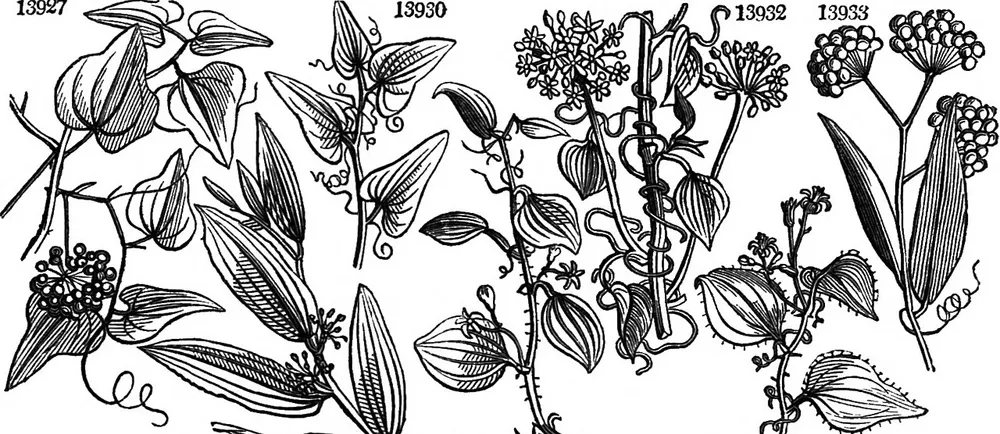
Photo: Internet Archive Book Images, No restrictions (via Wikimedia Commons)
Wild Yam
Dioscorea quaternata
Also known as Fourleaf Yam, Colic Root, Devil's Bones, American Wild Yam
Key benefits
✦Traditional uses
✦Long before it had a scientific name attached to it, wild yam root was known to Appalachian and Native herbalists simply as colic root, dug up and simmered into a decoction whenever a stomach cramped or a labor felt slow to progress. Its antispasmodic reputation made it a go-to remedy for menstrual cramping, digestive griping, and the aching joints of rheumatism, passed down through generations of home herbalists who kept a dried root or two in the cupboard. In the twentieth century this humble woodland vine found unexpected fame when chemists discovered that its diosgenin content could be converted in the laboratory into steroid hormones, a breakthrough that helped launch the modern birth control pill and cortisone medications. That industrial chapter belongs mostly to its Mexican cousins, but it cemented wild yam's reputation as one of the more quietly consequential plants in the American woods.
How to grow & use it
✦The full apothecary for Wild Yam
Traditional remedies and step-by-step preparations, a complete growing guide, and how to harvest, dry, and store it, all unlocked with HerbLens Unlimited.
- ✦Remedies & preparations
- ✦ Growing guide
- ✦Harvest & storage
From under $6 a month. Free plant identifications always included.
- ✦Cramp Bark
- ✦Chamomile
- ✦Ginger
- ✦Cramp Bark
- ✦Black Cohosh
“When a cramp clenches and the body is asking, gently, to unwind.”
In the 1940s, chemist Russell Marker developed a method for converting the diosgenin found in wild yam species into progesterone, a discovery that helped make possible the first birth control pill and paved the way for modern cortisone drugs.
The root contains saponins that can cause nausea or digestive upset in excess, so only small, prepared amounts are used traditionally. It grows among toxic look-alike vines, so beginners should not gather it, and folk practice avoids it during pregnancy.