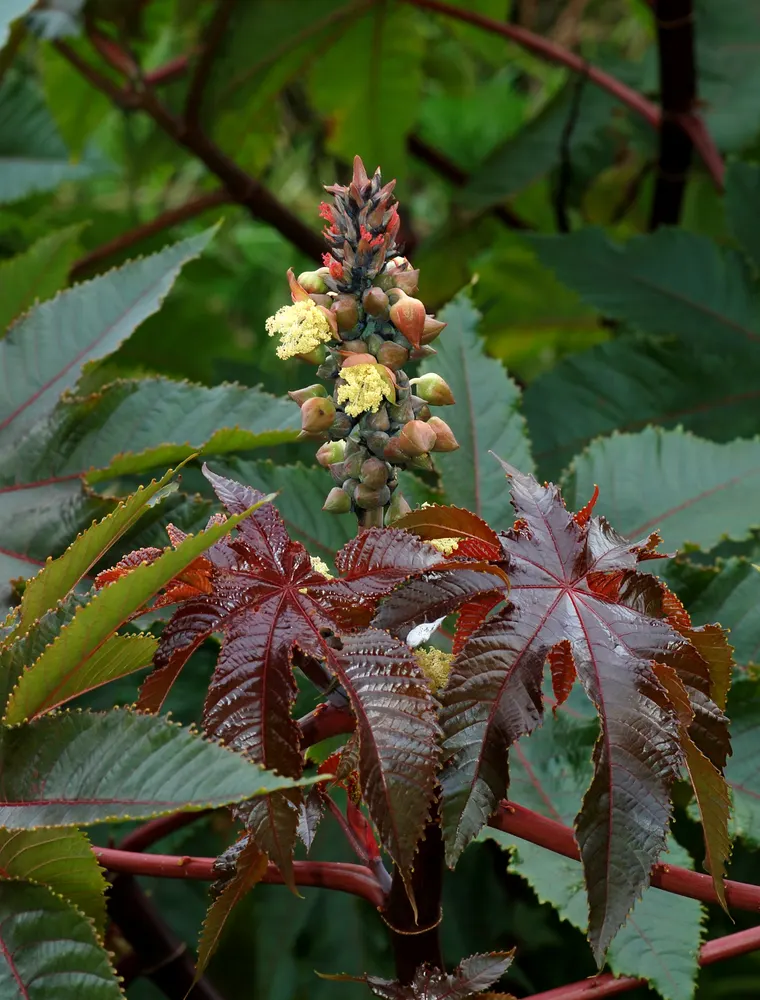
Photo: Alvesgaspar, CC BY-SA 3.0 (via Wikimedia Commons)
Castor Bean
Ricinus communis
Also known as Castor Oil Plant, Palma Christi, Mole Bean Plant, African Wonder Tree
Key benefits
✦Traditional uses
✦Castor oil has one of the longest documented histories of any plant product, with residue found in Egyptian tombs and mentions in papyri describing its use as lamp fuel and a skin softener over four thousand years ago. In Ayurvedic medicine it became known as a warming oil used externally and, in small traditional doses of the processed oil, internally to encourage regularity. The plant earned the name Palma Christi, or Hand of Christ, because its broad lobed leaves were thought to resemble an open palm. Despite its gentle reputation once processed, this is a plant that demands real respect, since the very seeds that yield the oil are dangerously toxic in their raw form.
How to grow & use it
✦The full apothecary for Castor Bean
Traditional remedies and step-by-step preparations, a complete growing guide, and how to harvest, dry, and store it, all unlocked with HerbLens Unlimited.
- ✦Remedies & preparations
- ✦ Growing guide
- ✦Harvest & storage
From under $6 a month. Free plant identifications always included.
- ✦Jojoba oil
- ✦Coconut oil
- ✦Sweet almond oil
- ✦Jojoba oil
- ✦Sweet almond oil
“For the gardener who wants a touch of jungle drama, tall and bold enough to stop visitors mid-step.”
Castor bean seeds contain ricin, one of the most toxic substances found in nature, and even a small handful of chewed seeds can be lethal, which is exactly why the commercial oil is made only through careful industrial processing that removes the toxic protein entirely before it ever reaches a bottle.
Ricinus communis is a genuinely dangerous plant and must be treated with real caution. Its seeds contain ricin, one of the most poisonous naturally occurring substances known, and swallowing even a very small number of raw or chewed seeds, particularly by a child or pet, can be fatal. All parts of the plant can cause irritation, and the seeds must never be eaten, brewed, or home-processed in any way. Commercial castor oil found on store shelves is safe for its traditional topical and limited historical internal uses only because manufacturers use controlled pressing and heat treatment that removes the ricin protein, a process that cannot be replicated safely at home. Even the properly processed oil is not appropriate for everyone: it should be avoided during pregnancy since it has traditionally been associated with stimulating uterine contractions, and anyone with a bowel obstruction, abdominal pain of unknown cause, or a chronic digestive condition should not use it without guidance. Keep growing plants away from children, grazing animals, and anywhere fallen seed pods could be mistaken for something edible. Please talk with a qualified healthcare professional before using castor oil for any purpose, and seek immediate emergency care if raw seeds are ever ingested.