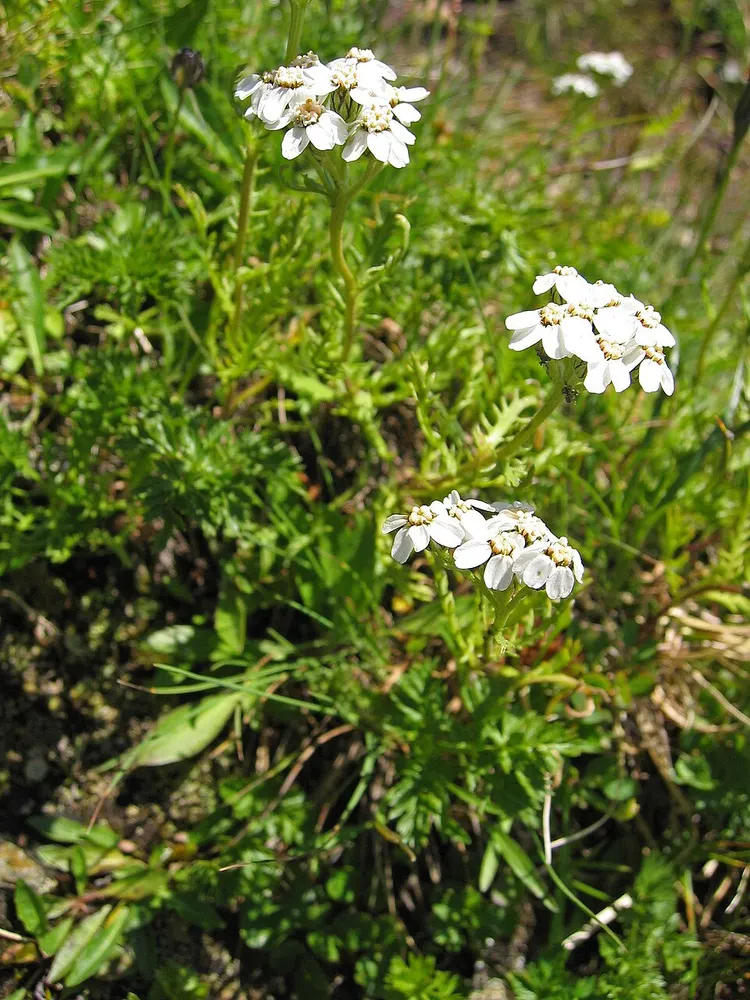
Photo: User:Tigerente, CC BY 2.5 (via Wikimedia Commons)
Musk Yarrow
Achillea moschata
Also known as Achillée musquée, Iva, Alpine Musk Yarrow, Schafgarbe (musk form)
Key benefits
✦Traditional uses
✦High in the Alps, where little else dares to bloom, musk yarrow has long been gathered by shepherds and mountain villagers for its intensely fragrant, musky-scented foliage. Steeped into tea, it was traditionally taken after heavy meals to ease the stomach, and its bitter, aromatic character made it a favorite flavoring in alpine herbal liqueurs and digestifs across Switzerland, Austria, France, and Italy. Because it grows only at such demanding altitudes, it earned a certain reverence among those who climbed to find it, treated almost as a reward for the effort of the gathering itself.
How to grow & use it
✦The full apothecary for Musk Yarrow
Traditional remedies and step-by-step preparations, a complete growing guide, and how to harvest, dry, and store it, all unlocked with HerbLens Unlimited.
- ✦Remedies & preparations
- ✦ Growing guide
- ✦Harvest & storage
From under $6 a month. Free plant identifications always included.
- ✦Mint
- ✦Gentian root
- ✦Alpine wormwood (genepi)
- ✦Common yarrow (Achillea millefolium)
- ✦Gentian root
“For the hush of high mountain air and a cup that carries a little of the scree slope with it.”
The species name moschata means musky, and it is well earned. Crush a leaf between your fingers and it releases a warm, musk-like scent so distinctive that alpine herders once used it to help identify the plant among lookalikes on the scree slopes.
Musk yarrow is in the daisy family and can cause contact dermatitis in those sensitive to ragweed or chrysanthemums. Traditionally used as a uterine stimulant, it's not recommended during pregnancy, and its folk association with affecting bleeding suggests caution with blood-thinning medication.