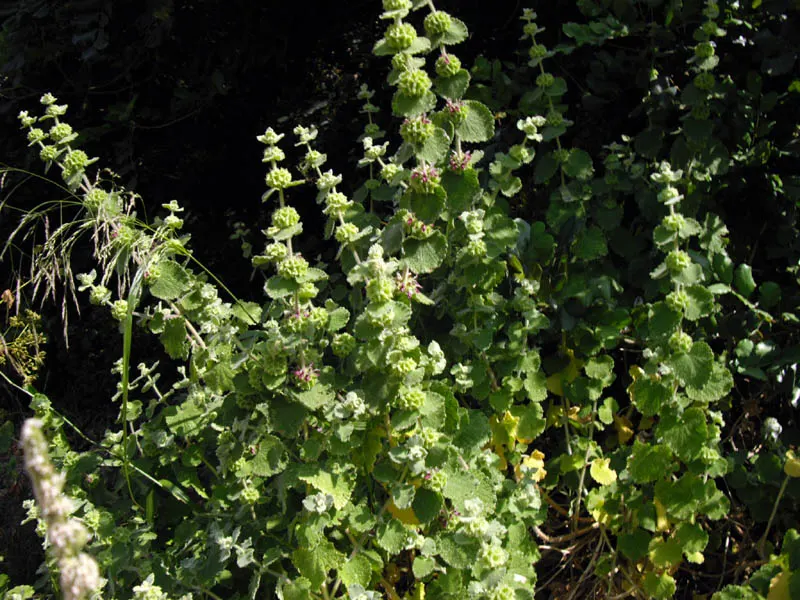
Photo: Ghislain118 http://www.fleurs-des-montagnes.net, CC BY-SA 3.0 (via Wikimedia Commons)
African Horehound
Ballota africana
Also known as Kattekruid, Cat's Herb, Wild Sage of the Cape, Cape Horehound
Key benefits
✦Traditional uses
✦Long before it had a Latin name, this grey-green, sweetly pungent shrub was a fixture of Cape Dutch and Khoi household medicine cabinets, brewed into a bitter tea for coughs, colds, and fevers. Afrikaans-speaking households called it kattekruid, cat's herb, and kept a bundle drying in the kitchen much the way other cultures kept chamomile close at hand. It was also traditionally taken to quiet the nerves, ease what old herbals called hysteria, and coax along a restless night's sleep, a use it shares with its European cousin, black horehound. Some traditional Cape remedies also turned to it for a queasy stomach, steeped alongside other bitter garden herbs.
Growing guide
✦Fresh to dried
✦Traditional preparations
✦Kattekruid Calming Tea
The classic Cape household tea, traditionally taken in the evening to quiet a cough and settle restless nerves before bed.
How it's made. Steep 1 teaspoon of the dried leaf in 250 ml of just-boiled water for 10 minutes, then strain. Sip slowly, warm, in the evening.
Honeyed Horehound Infusion
A gentler, sweetened version of the same tea, traditionally offered for a scratchy throat or an unsettled stomach.
How it's made. Prepare the tea as above, then stir in a little honey to taste once it has cooled slightly.
- ✦Honeybush
- ✦Buchu
- ✦Lemon balm
- ✦Black horehound (Ballota nigra)
- ✦Lemon balm
“When a cough won't quiet and the nerves feel just as ragged as the throat.”
Its Afrikaans name, kattekruid, means cat's herb, given by early Cape households who noticed cats rubbing against and rolling in the shrub much as they do with catnip, even though the two plants are not closely related.
African horehound has a traditional calming effect, so it may add to the effect of sedative medications. It is best avoided during pregnancy and breastfeeding without professional guidance.