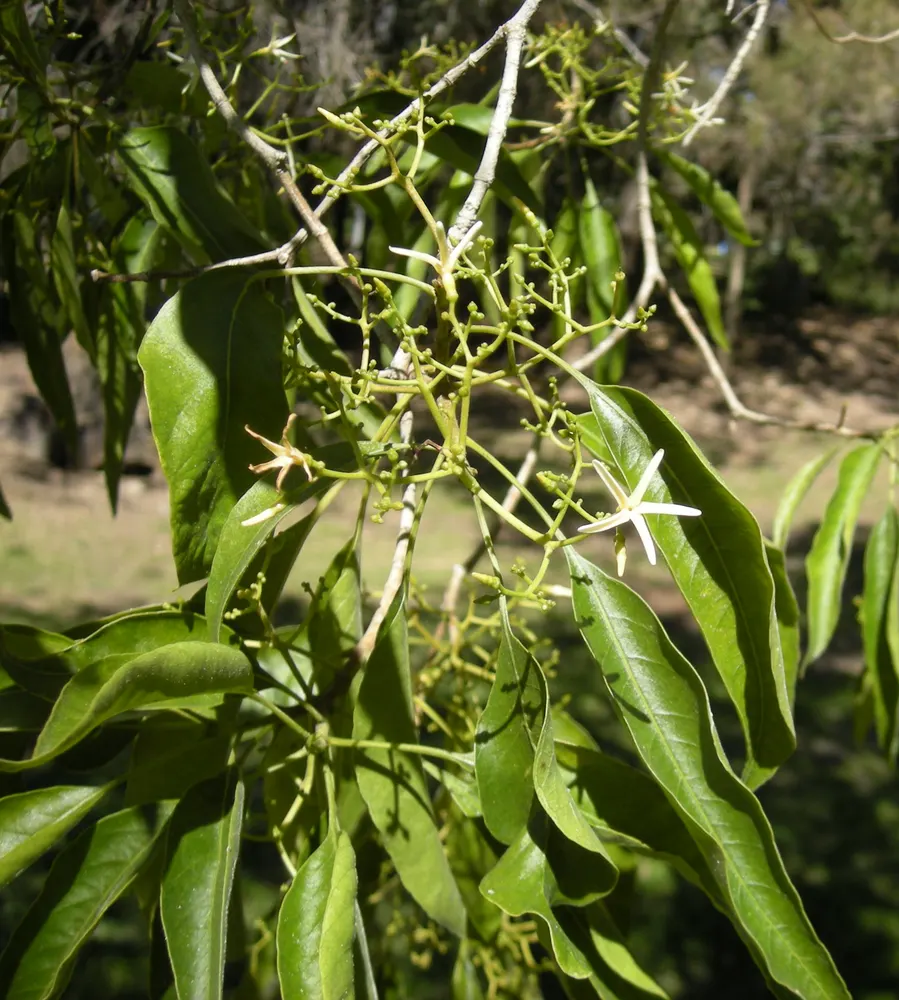
Photo: Ethel Aardvark, CC BY 3.0 (via Wikimedia Commons)
Bitter Bark
Alstonia constricta
Also known as Australian Quinine, Fever Bark, Alstonia Bark, Native Quinine, Dogwood (Qld)
Key benefits
✦Traditional uses
✦In the dry inland scrubs of Queensland and New South Wales, bitter bark earned its keep as the bushman's answer to fever when true quinine bark was an ocean away. Colonial settlers and bush doctors stripped its intensely bitter bark and brewed it much as they would Cinchona, leaning on it through bouts of ague and malarial-like fevers. It was regarded highly enough to be written into the British Pharmaceutical Codex as Alstonia Bark, prized as a tonic for a weak, sluggish digestion as much as for breaking a fever. Aboriginal Australians in its native range knew the tree long before European settlement and had their own uses for its intensely bitter inner bark.
How to grow & use it
✦The full apothecary for Bitter Bark
Traditional remedies and step-by-step preparations, a complete growing guide, and how to harvest, dry, and store it, all unlocked with HerbLens Unlimited.
- ✦Remedies & preparations
- ✦ Growing guide
- ✦Harvest & storage
From under $6 a month. Free plant identifications always included.
- ✦Cinchona bark
- ✦Gentian root
- ✦Cinchona (true quinine) bark
- ✦Gentian root
“When fever crept through the outback and the nearest doctor was days away, bushmen reached for the bitter bark of the scrub.”
Bitter bark's alkaloids include alstonine, a compound related to the same alkaloid family found in Rauvolfia serpentina, the source plant of the pharmaceutical reserpine, which is part of why this unassuming scrub tree once traveled all the way to British pharmacy shelves.
The bark contains potent alkaloids that affect heart rate and blood pressure and can be dangerous for anyone with heart conditions or on cardiovascular or psychiatric medication. This is not a plant for home preparation or self-dosing.