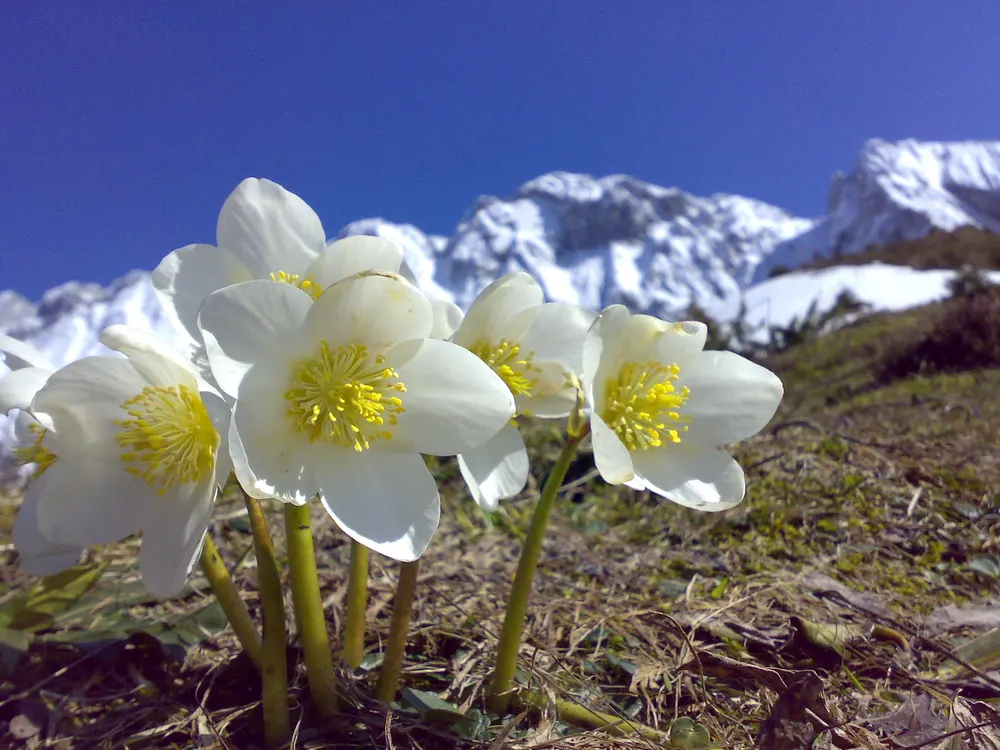
Photo: Robert Hundsdorfer, CC BY-SA 2.0 de (via Wikimedia Commons)
Christmas Rose
Helleborus niger
Also known as Christmas Rose, Black Hellebore, Winter Rose, Snow Rose
Key benefits
✦Traditional uses
✦Helleborus niger carries one of the oldest and most cautionary stories in herbal history. In ancient Greece it was known as melampode, named for the seer Melampus, who was said to have used it to treat the daughters of King Proetus for madness, and it became bound up for centuries with old ideas about purging melancholy and 'black bile.' Medieval and early modern physicians experimented with its root as a drastic purgative and as a treatment for dropsy, the old term for the swelling caused by heart failure, but dosing was notoriously unpredictable and poisonings were common even among practitioners. Modern herbalism has set the plant aside entirely. Today it survives almost exclusively as a beloved winter garden flower, its old medicinal reputation preserved as history rather than practice.
How to grow & use it
✦The full apothecary for Christmas Rose
Traditional remedies and step-by-step preparations, a complete growing guide, and how to harvest, dry, and store it, all unlocked with HerbLens Unlimited.
- ✦Remedies & preparations
- ✦ Growing guide
- ✦Harvest & storage
From under $6 a month. Free plant identifications always included.
- ✦Lenten rose (Helleborus orientalis) for a longer bloom season
- ✦Hostas and ferns as shade-garden companions
- ✦Snowdrops (Galanthus) for overlapping winter interest
- ✦Lenten rose (Helleborus orientalis)
- ✦Snowdrops (Galanthus nivalis)
“For the gardener who wants a green, living thing pushing up through frost and snow when everything else in the garden has gone to sleep.”
A charming legend holds that the Christmas rose first bloomed from the tears of a poor shepherd girl near Bethlehem who had no gift to bring the infant Jesus and wept in the snow, her tears becoming the first white winter blossoms. The far less charming truth is that every part of the real plant is dangerously toxic, a reminder that folklore and safety are two very different things.
Helleborus niger is genuinely poisonous and should never be ingested in any form. All parts of the plant, especially the roots and rhizomes, contain cardiac glycosides (including bufadienolides such as hellebrin) and protoanemonin, compounds that can cause severe nausea, vomiting, abdominal pain, dangerous drops in heart rate, cardiac arrhythmia, and in significant exposures can be fatal. The sap can also irritate skin and eyes on contact, so wear gloves when handling or cutting the plant. Keep it well out of reach of children and pets, both of whom are at real risk from chewing on leaves, roots, or flowers. There is no traditional preparation of this plant that is safe for home use, and its old reputation as a medicinal herb belongs to history, not to modern practice. If you are ever concerned about accidental ingestion, contact poison control or emergency services immediately rather than attempting any home remedy, and for anything related to heart health or mental health, please consult a qualified medical professional.