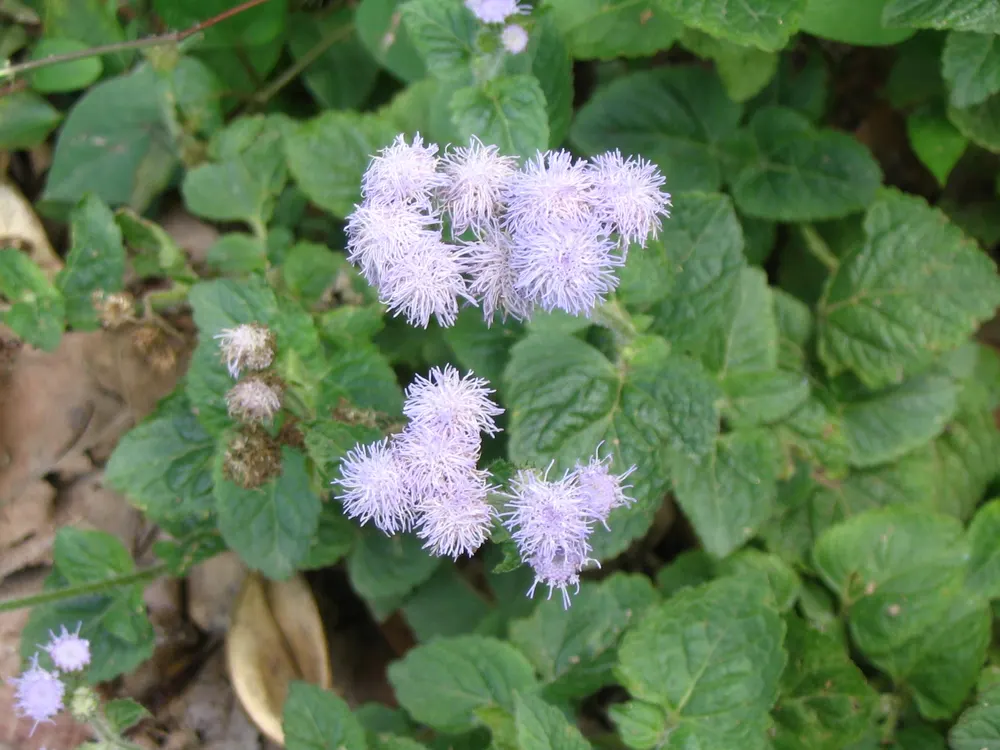
Photo: Minghong, CC BY-SA 3.0 (via Wikimedia Commons)
Billygoat Weed
Ageratum conyzoides
Also known as Goatweed, Chick Weed, Tropical Whiteweed, Mexican Paintbrush
Key benefits
✦Traditional uses
✦Billygoat weed traveled the world almost as quickly as it took root, hitching along trade routes from its native tropical Americas until it became one of the most familiar roadside weeds of Africa, Asia, and the Pacific. In dozens of traditional systems, crushed fresh leaves were pressed onto cuts, burns, and skin infections as a quick field remedy, and the bruised plant was rubbed on the skin to discourage biting insects. Healers in West Africa and parts of Southeast Asia also valued it as a fever and rheumatism remedy applied externally, long before modern chemists identified the alkaloids that now caution against taking it internally. It remains a plant studied more for its cautionary chemistry than embraced as a kitchen or tea herb today.
How to grow & use it
✦The full apothecary for Billygoat Weed
Traditional remedies and step-by-step preparations, a complete growing guide, and how to harvest, dry, and store it, all unlocked with HerbLens Unlimited.
- ✦Remedies & preparations
- ✦ Growing guide
- ✦Harvest & storage
From under $6 a month. Free plant identifications always included.
- ✦Plantain leaf
- ✦Calendula
- ✦Calendula (for gentle, well-studied topical skin support)
- ✦Yarrow (for traditional topical wound care)
“A plant whose story belongs to the wound poultice and the roadside, not the teacup.”
Despite being one of the most studied medicinal weeds in tropical ethnobotany, valued for its pungent essential oil and its knack for showing up wherever soil has been disturbed, Ageratum conyzoides carries the same pyrrolizidine alkaloids found in comfrey and ragwort, which is why modern herbalists steer it firmly away from the teapot even as village healers once reached for it constantly at the skin's surface.
Billygoat Weed contains pyrrolizidine alkaloids, the same liver-damaging, potentially carcinogenic compounds found in comfrey and ragwort, so it should never be taken by mouth. It is especially unsafe in pregnancy and breastfeeding, and should be kept away from children, pets, and grazing livestock.