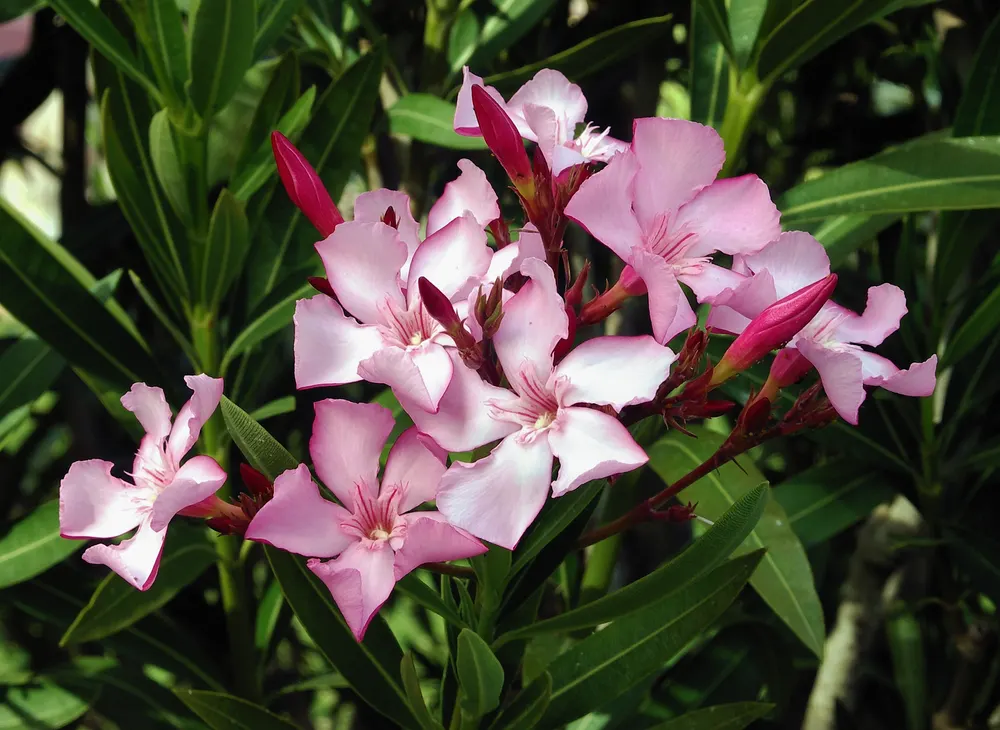
Photo: Alvesgaspar, CC BY 2.5 (via Wikimedia Commons)
Indian Oleander
Nerium indicum
Also known as Oleander, Sweet Oleander, Kaner, Rosebay, Be-Still Tree
Traditional uses
✦Nerium indicum has a long history in ornamental and ceremonial planting across South Asia, where its bright, oleander-like blooms decorate temple grounds, courtyards, and roadsides. In some folk traditions, small and carefully measured preparations of the bark or leaves were once used externally or in minute internal doses for skin conditions and as a heart tonic, but this practice was always recognized as extremely dangerous and has largely been abandoned in favor of safer alternatives. Today the plant is valued almost entirely for its beauty, drought tolerance, and toughness in difficult growing conditions, not for any home remedy.
How to grow & use it
✦The full apothecary for Indian Oleander
Traditional remedies and step-by-step preparations, a complete growing guide, and how to harvest, dry, and store it, all unlocked with HerbLens Unlimited.
- ✦Remedies & preparations
- ✦ Growing guide
- ✦Harvest & storage
From under $6 a month. Free plant identifications always included.
- ✦Hawthorn (Crataegus species), traditionally used as a gentle heart-supportive herb
- ✦Calendula, for skin-soothing preparations where oleander was once mistakenly used
“A plant to admire from a distance, not to gather for the pot or the medicine chest.”
Every part of Nerium indicum, including its sap, smoke from burning trimmings, and even honey made from its nectar, contains potent cardiac glycosides, and there are documented cases of fatal poisoning from something as simple as using a single stem as a skewer for grilling food.
Nerium indicum (Indian oleander) is highly toxic in all plant parts due to cardiac glycosides; ingestion can cause fatal heart arrhythmias. Not for internal or home remedy use under any circumstances. Keep away from children, pets, and livestock, and seek emergency medical care immediately if exposure occurs.