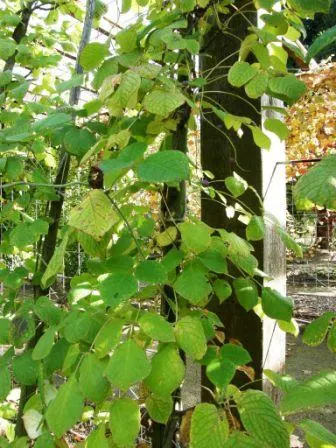
Photo: VoDeTan2 Dericks-Tan, CC BY-SA 3.0 (via Wikimedia Commons)
Blue Bean Vine
Sinofranchetia chinensis
Also known as Sinofranchetia, Chinese Blue Bean Vine
Key benefits
✦Traditional uses
✦In the misty mountain forests of central China, Sinofranchetia chinensis climbs high into the canopy, its curious sausage-shaped, deep violet pods dangling like ornaments each autumn. Local foragers in Hubei, Sichuan, and Shaanxi have long gathered the ripe fruit for its sweet, translucent pulp, much as they do the fruit of its better known cousin, Akebia. Western botanists took note of the vine in the early twentieth century, and it found a quiet home in collectors' gardens for its handsome trifoliate leaves and unusual flower clusters. It remains a plant grown chiefly for beauty and curiosity rather than for any well established medicinal tradition.
How to grow & use it
✦The full apothecary for Blue Bean Vine
Traditional remedies and step-by-step preparations, a complete growing guide, and how to harvest, dry, and store it, all unlocked with HerbLens Unlimited.
- ✦Remedies & preparations
- ✦ Growing guide
- ✦Harvest & storage
From under $6 a month. Free plant identifications always included.
- ✦Akebia quinata (chocolate vine)
- ✦Clematis
- ✦Climbing hydrangea
- ✦Akebia quinata, whose fruit is similar in flavor and texture
“For the gardener who wants an arbor wrapped in glossy leaves by June and hung with strange, jewel-toned pods by October.”
Sinofranchetia is a monotypic genus, meaning this vine is the only species in its entire genus. It honors Adrien Franchet, the French botanist who spent decades cataloging the flora of China without ever traveling there himself, working instead from dried specimens sent home by missionary plant collectors.
The fresh fruit pulp is eaten in its native range, but as with any unfamiliar wild fruit, the skin and seeds are not typically eaten and should be discarded.