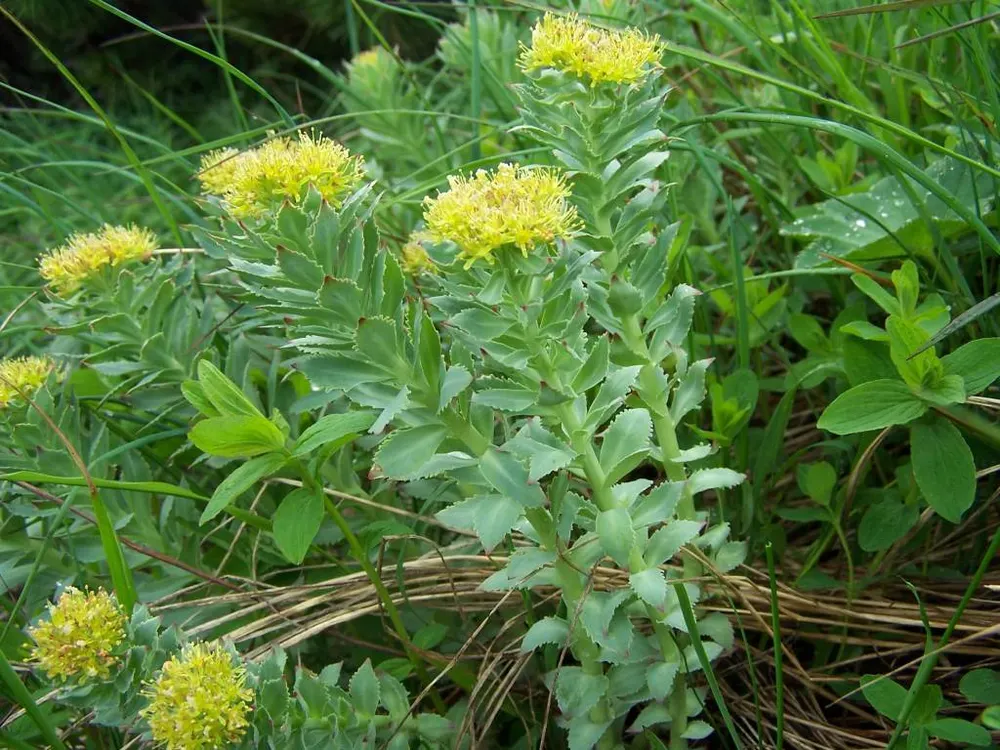
Photo: Opioła Jerzy, CC BY 2.5 (via Wikimedia Commons)
Rhodiola
Rhodiola rosea
Also known as Golden Root, Arctic Root, Roseroot, King's Crown
Key benefits
✦Traditional uses
✦For centuries, people living in the harshest reaches of Siberia, Scandinavia, and the Arctic have dug up rhodiola's thick, rose-scented root and turned to it when the body and mind were pushed to their limits. Siberian healers sent newlyweds home with rhodiola root, believing it fostered strength and fertility, while Vikings are said to have chewed it before long voyages to build endurance against cold and exhaustion. It became known across Scandinavian and Russian folk medicine as a root for facing down hard winters, long workdays, and the fatigue that comes with both. Only in the last century did it travel west, carried first by Soviet athletes and researchers who studied it for its traditional reputation as a helper against stress and tiredness.
How to grow & use it
✦The full apothecary for Rhodiola
Traditional remedies and step-by-step preparations, a complete growing guide, and how to harvest, dry, and store it, all unlocked with HerbLens Unlimited.
- ✦Remedies & preparations
- ✦ Growing guide
- ✦Harvest & storage
From under $6 a month. Free plant identifications always included.
- ✦Ashwagandha
- ✦Holy Basil (Tulsi)
- ✦Eleuthero
- ✦Eleuthero (Siberian Ginseng)
- ✦Schisandra
“For the mornings that ask more of you than you feel you have to give.”
Rhodiola's cut root releases a scent so close to that of roses that early botanists gave it the species name rosea, and Swedish apothecaries once prized it as a natural perfume long before its use as a tonic root became widespread.
Rhodiola is stimulating and can cause jitteriness or trouble sleeping if taken late in the day. It may interact with antidepressants, including SSRIs and MAOIs, as well as blood pressure medications, and people with bipolar disorder have traditionally been cautioned against it since stimulating herbs can trigger manic episodes.