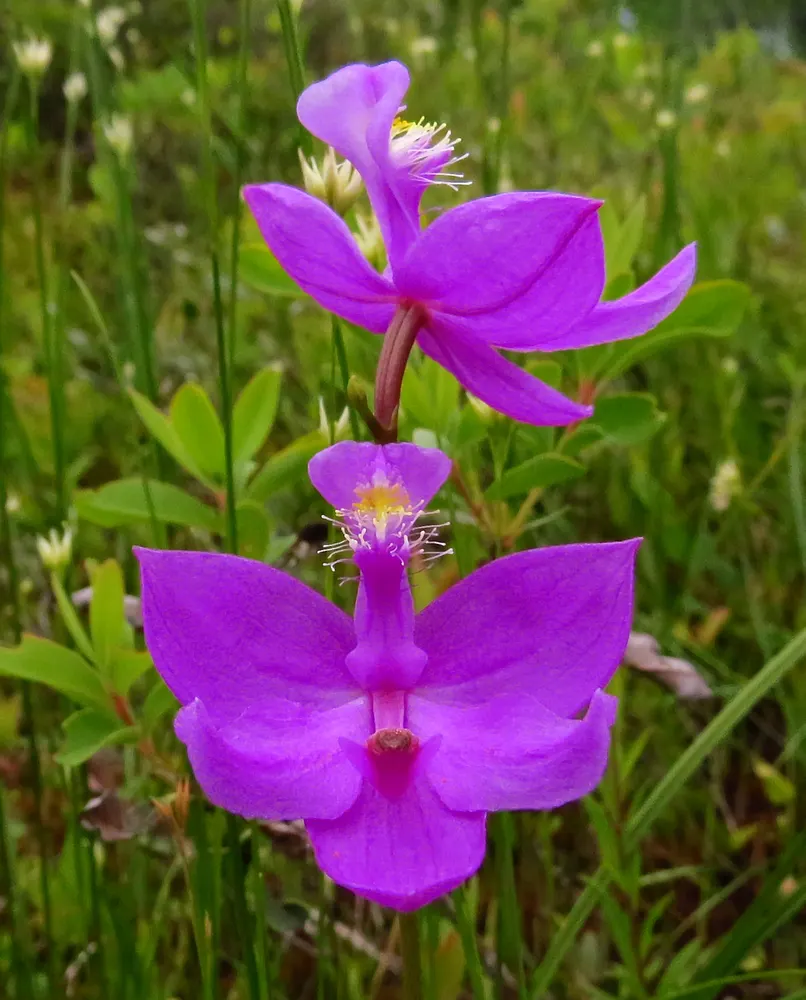
Photo: D. Gordon E. Robertson, CC BY-SA 4.0 (via Wikimedia Commons)
Grass Pink
Calopogon tuberosus
Also known as Common Grass-Pink, Tuberous Grass-Pink, Bog Orchid
Key benefits
✦Traditional uses
✦Grass Pink has no established history as a medicine or food plant. Its real legacy is as a marker of undisturbed, high quality wetland habitat, the kind of acidic bog and wet savanna that early botanists and local naturalists prized for the sheer variety of rare plants growing there. Wildflower enthusiasts and orchid societies have documented and celebrated its bloom for well over a century, and it remains one of the most photographed native orchids of the eastern bogs each early summer. Because it is so tied to fragile, undrained wetlands, its presence has long served as a quiet signpost telling naturalists that a place is still wild.
How to grow & use it
✦The full apothecary for Grass Pink
Traditional remedies and step-by-step preparations, a complete growing guide, and how to harvest, dry, and store it, all unlocked with HerbLens Unlimited.
- ✦Remedies & preparations
- ✦ Growing guide
- ✦Harvest & storage
From under $6 a month. Free plant identifications always included.
- ✦Pitcher plant (Sarracenia)
- ✦Round-leaved sundew (Drosera rotundifolia)
- ✦Sphagnum moss
- ✦Rose pogonia (Pogonia ophioglossoides)
- ✦Dragon's mouth orchid (Arethusa bulbosa)
“For the boggy meadow morning when a spark of magenta catches the corner of your eye and asks you to kneel down and look closer.”
Grass Pink plays a clever trick on bees. Unlike most orchids, its lip sits at the top of the flower and is covered in yellow bristles that mimic a rich cluster of pollen bearing stamens. When a bee lands to collect what looks like pollen, the hinged lip suddenly tips backward and drops the bee onto the flower's true reproductive column below, dusting it with pollen in the process.
Grass Pink has no documented history as a food or medicine, and no established safety or toxicity data exists for internal use, so it should never be eaten or brewed. All native orchids in the genus Calopogon are protected under state wildflower laws in much of their range and fall under international trade protections for the orchid family, so digging, uprooting, or removing plants from the wild is both illegal in many areas and usually fatal to the plant, since it depends on a specific soil fungus it cannot easily rebuild elsewhere. Enjoy it with a camera, not a trowel, and check with a local native plant society or extension office before ever attempting to grow or relocate one.