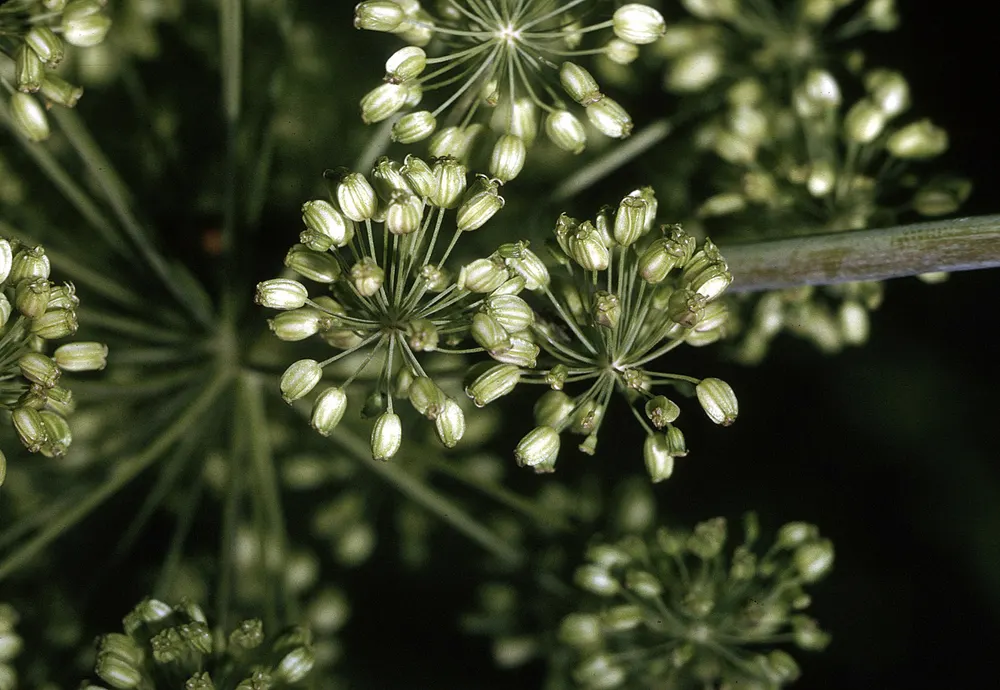
Photo: Robert H. Mohlenbrock. USDA NRCS. 1995. Northeast wetland flora: Field office guide to plant species. Northeast National Technical Center, Chester. Courtesy of USDA NRCS Wetland Science Institute., Public domain (via Wikimedia Commons)
American Angelica (Purplestem Angelica)
Angelica atropurpurea
Also known as Purplestem Angelica, Great Angelica, Masterwort, High Angelica, Alexanders
Key benefits
✦Traditional uses
✦Purplestem angelica was carried in the medicine bags of many Native American nations, including the Iroquois and Meskwaki, who dug its stout root for teas and tonics used against colds, coughs, and sluggish digestion. Some communities also chewed the root or burned it as a protective smoke, believing it warded off illness and bad influences. When European settlers arrived and found their familiar Angelica archangelica absent, they turned to this native cousin, candying its stalks and steeping its root much the same way herbalists across the Atlantic had for centuries. Its old-world name is said to honor the Archangel Michael, whose feast day fell near the plant's traditional blooming time, and settlers long regarded it as a guardian herb kept near the hearth.
Growing guide
✦Fresh to dried
✦Traditional preparations
✦Warming Angelica Root Tonic
A traditional decoction used the way settlers and herbalists once took angelica root, as a warming after-meal tonic on cold or damp days.
How it's made. Traditionally, a tonic is made by simmering 1 level teaspoon of dried, sliced angelica root in 250 ml of water, covered, for about 10 to 15 minutes, then straining before drinking.
- ✦Chamomile
- ✦Ginger
- ✦Fennel
- ✦Angelica archangelica (European angelica)
- ✦Osha root
“For an old-fashioned, warming root tonic on a cold, gray afternoon.”
The species name atropurpurea means dark purple, describing the striking wine colored stems that set this native plant apart from its pale green European cousin, Angelica archangelica.
Angelica atropurpurea belongs to the carrot family, which includes deadly look-alikes such as water hemlock and poison hemlock, so never harvest it from the wild without expert identification, since misidentification has caused fatal poisonings. Its sap and fresh leaves can cause photosensitivity in sunlight, and it has traditionally been avoided in pregnancy and by people taking blood thinners.