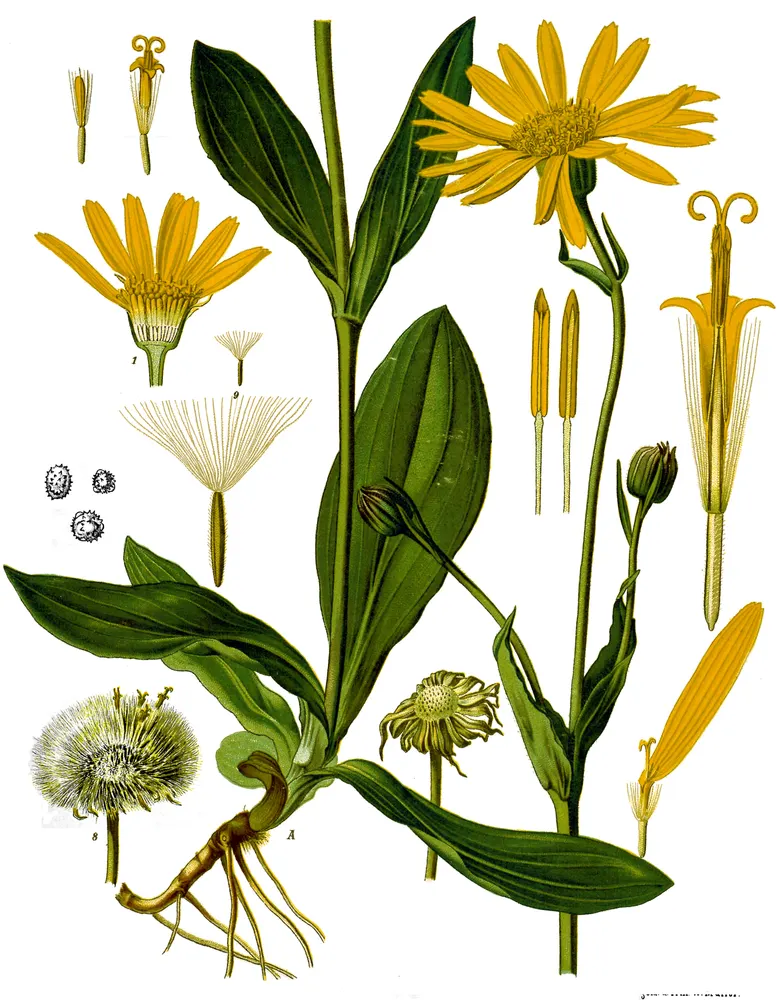
Photo: Franz Eugen Köhler, Köhlers Medizinal-Pflanzen, Public domain (via Wikimedia Commons)
Arnica
Arnica montana
Also known as Mountain Arnica, Leopard's Bane, Mountain Tobacco, Fallkraut
Key benefits
✦Traditional uses
✦High in the meadows of the Alps, Pyrenees, and Carpathians, shepherds and mountain villagers have reached for arnica's sunny flowers for centuries, rubbing infused oils and salves into the aches and bruises that came with a hard day on steep ground. It became so tied to the tumbles of alpine life that old herbals sometimes called it fallkraut, the fall herb. By the nineteenth century it had traveled into European household medicine chests and eventually into homeopathic practice, always applied to the outside of the body rather than taken in, since arnica has long been understood as a topical friend rather than an internal one.
Growing guide
✦Fresh to dried
✦- ✦Calendula
- ✦Comfrey
- ✦St. John's Wort
- ✦Calendula
- ✦Comfrey
“For the bruise that blooms after a hard fall on a mountain trail.”
Alpine shepherds once dried and smoked arnica leaves as a rustic tobacco substitute, which is how the plant picked up its old country name, mountain tobacco.
Arnica is toxic if swallowed and should only be used on unbroken skin, never on wounds, near the eyes, or internally. It can cause allergic skin reactions in people sensitive to ragweed, chrysanthemums, or other daisy family plants, and it may interact with blood thinners and is best avoided during pregnancy and breastfeeding.