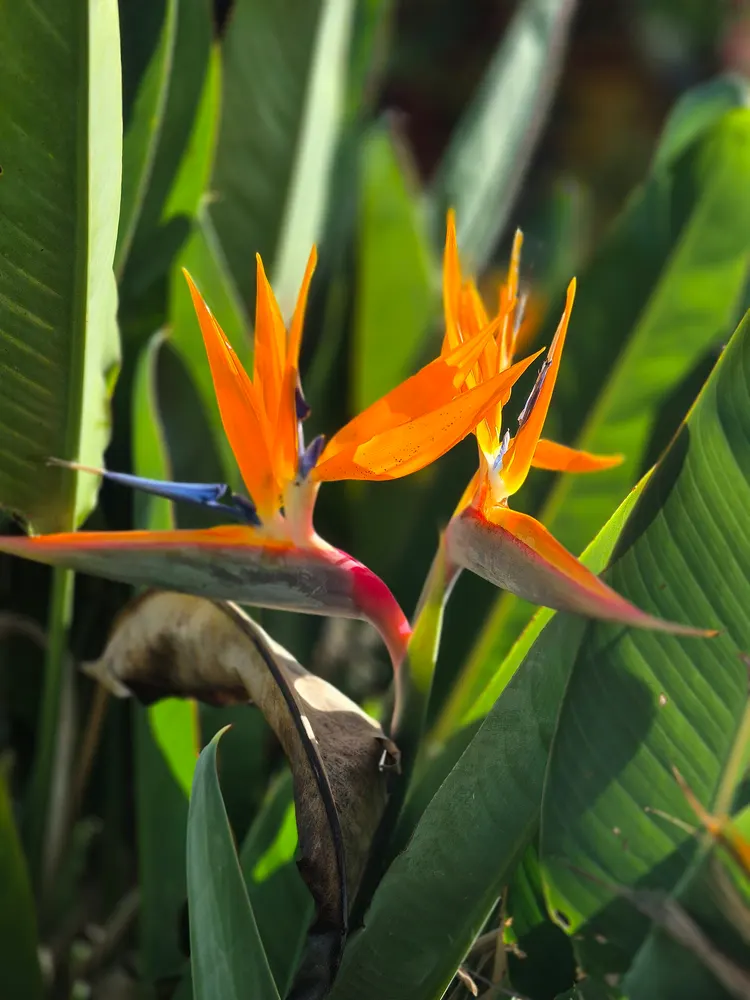
Photo: Gabriel Collares, CC BY 4.0 (via Wikimedia Commons)
Bird of Paradise
Strelitzia reginae
Also known as Crane flower, Bird-of-paradise flower, Strelitzia
Key benefits
✦Traditional uses
✦Bird of paradise has never belonged to the apothecary shelf, its story is one of gardens, florists, and national pride rather than home remedies. The plant was carried out of South Africa's Eastern Cape to Kew Gardens in the 1770s and named strelitzia in honor of Queen Charlotte of Mecklenburg-Strelitz, wife of King George III, and reginae in tribute to her royal station. In its homeland it became the floral emblem of South Africa, appearing on stamps, currency, and at state occasions as a symbol of freedom and paradise. Growers and florists around the world have prized it ever since for its uncanny, bird-shaped blooms, which can last for weeks once cut and remain one of the most recognizable flowers in tropical floristry.
How to grow & use it
✦The full apothecary for Bird of Paradise
Traditional remedies and step-by-step preparations, a complete growing guide, and how to harvest, dry, and store it, all unlocked with HerbLens Unlimited.
- ✦Remedies & preparations
- ✦ Growing guide
- ✦Harvest & storage
From under $6 a month. Free plant identifications always included.
- ✦Canna lily
- ✦Hibiscus
- ✦Bougainvillea
- ✦Heliconia
- ✦Banana plant (Musa)
“For a garden corner or vase that wants pure drama, without saying a word.”
Bird of paradise flowers are pollinated by sunbirds in the wild, which land on the petal shaped like a landing perch, and their weight causes the flower to spring open and dust their feet with pollen.
Bird of Paradise is not for eating: the flowers, leaves, and especially seed pods can cause vomiting and stomach upset, and the plant is toxic to cats, dogs, and horses, sometimes causing drowsiness or loss of coordination. The sap can also irritate skin or eyes, so keep pods and cut stems away from children and pets.