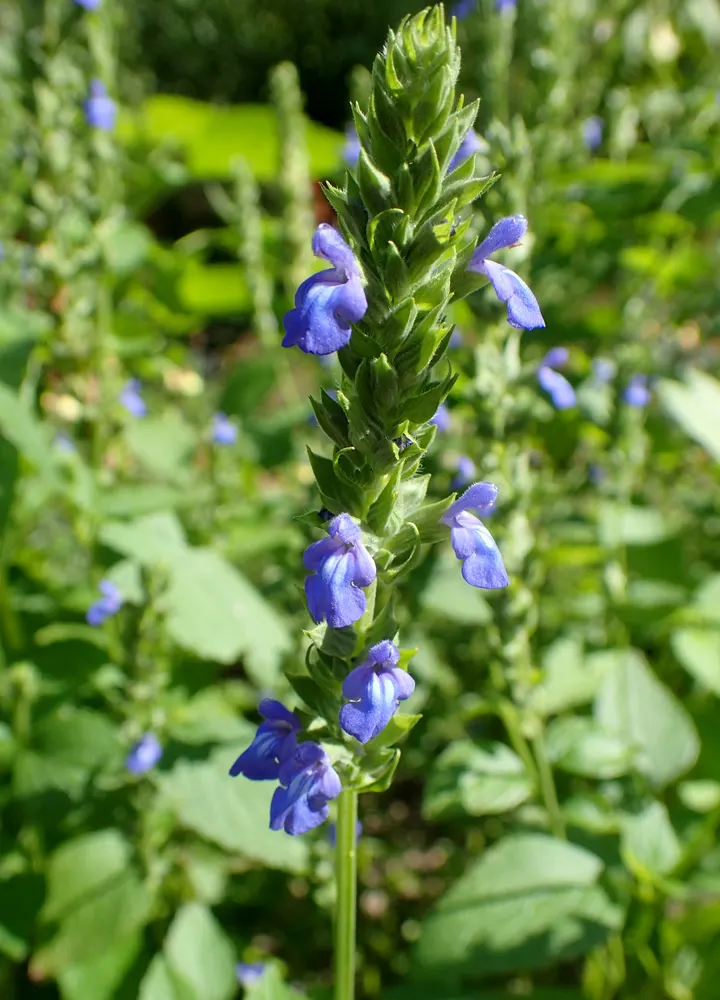
Photo: Krzysztof Ziarnek, Kenraiz, CC BY-SA 4.0 (via Wikimedia Commons)
Chia
Salvia hispanica
Also known as Chian, Salba, Mexican Chia, Golden Chia
Key benefits
✦Traditional uses
✦Long before it appeared in modern pantries, chia was a cornerstone crop for the Aztec and Maya peoples, grown alongside corn, beans, and amaranth as one of the essential foods of Mesoamerica. Runners and warriors were said to carry small pouches of the dry seed on long journeys, taking only a spoonful with water to sustain them for hours, which is how the seed earned its old reputation as a running food. Ground into flour, pressed for oil, or simply stirred into water until it turned thick and gel-like, chia was treasured as a food that could stretch a small amount into lasting nourishment. That same gentle, soothing quality made it a traditional favorite for settling the stomach and easing digestion.
How to grow & use it
✦The full apothecary for Chia
Traditional remedies and step-by-step preparations, a complete growing guide, and how to harvest, dry, and store it, all unlocked with HerbLens Unlimited.
- ✦Remedies & preparations
- ✦ Growing guide
- ✦Harvest & storage
From under $6 a month. Free plant identifications always included.
- ✦Mint
- ✦Lemon balm
- ✦Cinnamon
- ✦Ground flaxseed
- ✦Hemp seed
“You need steady, unhurried energy and a gentle nudge for a sluggish gut.”
The word chia comes from the Nahuatl chian, meaning oily, and the seed was once so prized that Aztec towns paid a portion of their yearly tribute to the emperor in sacks of it, right alongside corn and beans.
Dry chia seeds swell quickly and can pose a choking risk if swallowed dry, so let them hydrate in liquid for at least 10 minutes first. Because chia may enhance blood-thinning medication and, in large amounts, affect blood sugar or blood pressure, use it with care if you're on related medication.