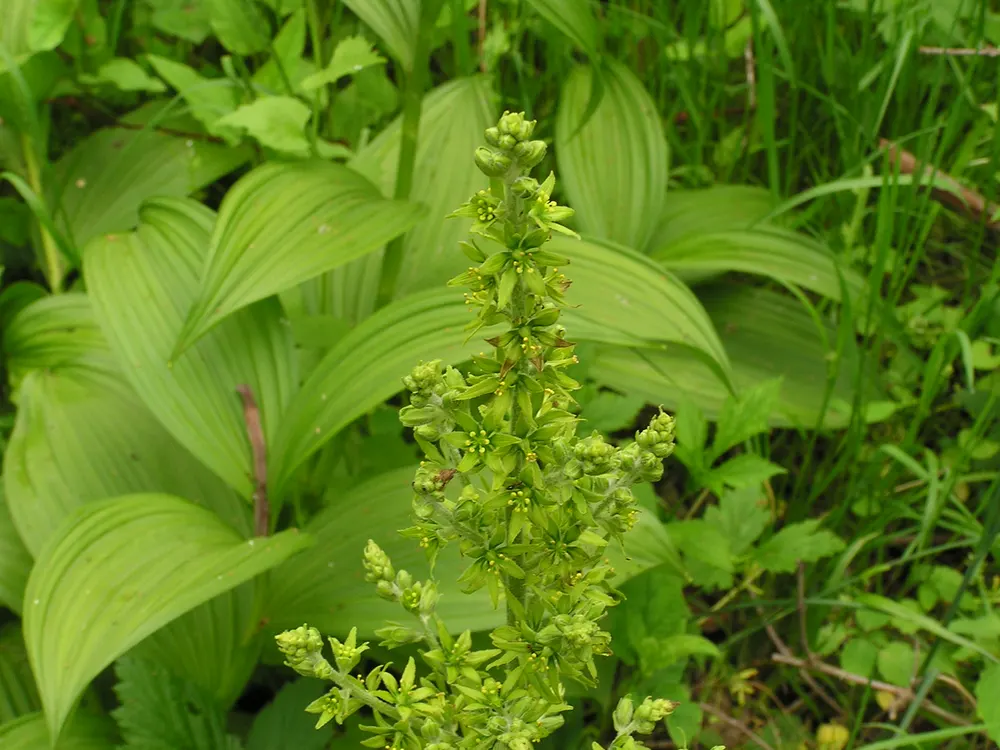
Photo: User:SB_Johnny, CC BY-SA 3.0 (via Wikimedia Commons)
American False Hellebore
Veratrum viride
Also known as Indian Poke, Green False Hellebore, Itchweed, Devil's Bite, Big Hellebore
Traditional uses
✦American false hellebore has a long and complicated history among Indigenous peoples of the Northeast and Pacific Northwest, who understood its power intimately. Some nations used carefully measured root preparations as a test of courage or leadership, watching how a young man withstood its effects, while others used it with extreme caution for ceremonial and pain purposes, always aware that the margin between a working dose and a fatal one was vanishingly small. Nineteenth century physicians later isolated its alkaloids and used them briefly to treat severe high blood pressure and eclampsia in hospital settings before safer drugs replaced them. None of this history translates into anything safe to attempt at home, and the plant survives today mostly as a cautionary tale and a striking sight in wet mountain meadows.
How to grow & use it
✦The full apothecary for American False Hellebore
Traditional remedies and step-by-step preparations, a complete growing guide, and how to harvest, dry, and store it, all unlocked with HerbLens Unlimited.
- ✦Remedies & preparations
- ✦ Growing guide
- ✦Harvest & storage
From under $6 a month. Free plant identifications always included.
“A plant to admire from the path, not to gather into a basket.”
Early American farmers made a spray from the crushed root to keep insects off their crops, and its old nickname itchweed comes from the way the powdered root would make anyone nearby sneeze and itch without mercy.
Veratrum viride is one of the most toxic plants in North America. Every part of the plant, especially the root and young shoots, contains steroidal alkaloids that can cause severe vomiting, dangerously low blood pressure, slowed or irregular heartbeat, seizures, and death within hours of ingestion. Poisoning has occurred from mistaking the young leaves for edible plants like false hellebore look-alikes such as ramps or skunk cabbage, so it should never be foraged, tasted, or prepared in any home remedy, tea, or tincture under any circumstances. It is not appropriate for pregnant or breastfeeding people, children, pets, or livestock, and it carries serious interactions with heart and blood pressure medications. If exposure or ingestion is suspected, contact emergency medical services or a poison control center immediately rather than attempting any home treatment, and consult a qualified medical professional for any interest in this plant's history or botany.