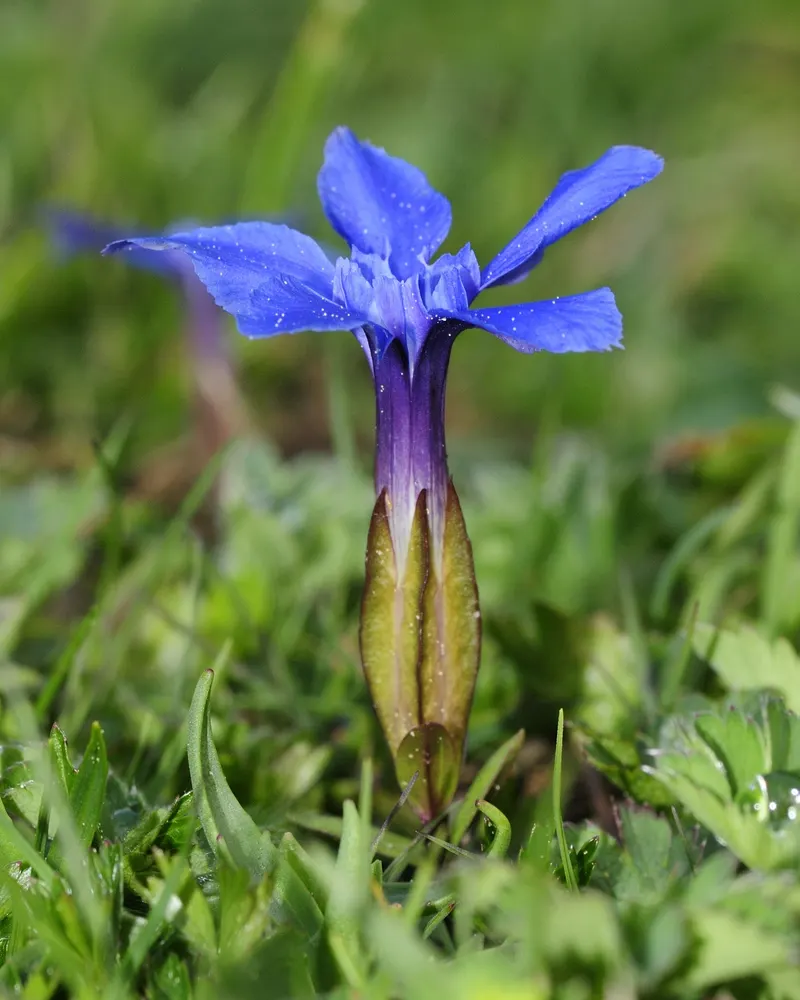
Photo: Philipp Weigell, CC BY 3.0 (via Wikimedia Commons)
Spring Gentian
Gentiana verna
Also known as Spring gentian, Vernal gentian, Star gentian
Key benefits
✦Traditional uses
✦Spring gentian is not the bitter root of the herbalist's cabinet, that distinction belongs to its larger cousin Gentiana lutea, but this small alpine has its own long history of being cherished rather than consumed. Mountain travelers and early botanists prized it as one of the first true blues to appear after snowmelt, and its color was so striking that dye and paint makers borrowed the name "gentian blue" to describe the deepest, purest blues they could mix. In places where it still grows wild at the edge of its range, such as the Teesdale fells of northern England, it survives as a fragile relic of the ice age and has become a local emblem people go out of their way to protect rather than pick.
How to grow & use it
✦The full apothecary for Spring Gentian
Traditional remedies and step-by-step preparations, a complete growing guide, and how to harvest, dry, and store it, all unlocked with HerbLens Unlimited.
- ✦Remedies & preparations
- ✦ Growing guide
- ✦Harvest & storage
From under $6 a month. Free plant identifications always included.
- ✦Alpine saxifrage
- ✦Dwarf iris
- ✦Mountain avens
- ✦Gentiana acaulis (trumpet gentian), for a similarly vivid blue that is somewhat easier to establish
“For the flash of impossible blue that tells you the mountain snow has finally let go of spring.”
Spring gentian's blue is so intense and pure that it gave its name to the color "gentian blue" still used in art, dye, and design today, and botanists consider it one of the truest blues found anywhere in the plant world.
There is no tradition of eating or brewing spring gentian, and wild populations are legally protected, so it should never be picked or foraged. Enjoy it in a garden setting instead.