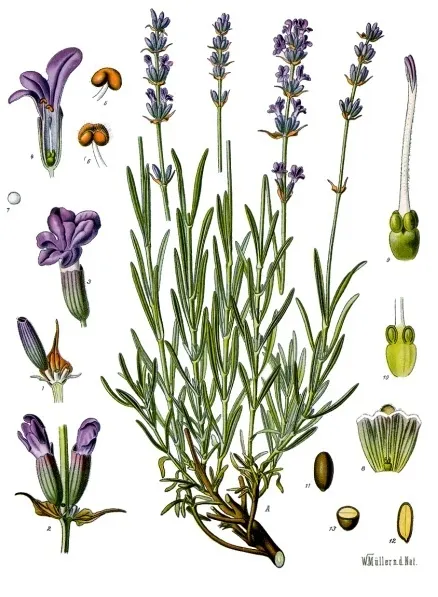
Photo: Franz Eugen Köhler, Köhler's Medizinal-Pflanzen, Public domain (via Wikimedia Commons)
Lavender
Lavandula angustifolia
Also known as English Lavender, True Lavender
Key benefits
✦Traditional uses
✦Lavender may be the most beloved scent in the herb garden, and its calm is more than perfume. For generations its silvery-purple flowers have been slipped into pillows and drawn into baths to loosen tension, quiet a racing mind, and welcome sleep. The gently sedative aroma is why lavender turns up in everything from bedtime sachets to a simple cup of evening tea.
How to grow & use it
✦The full apothecary for Lavender
Traditional remedies and step-by-step preparations, a complete growing guide, and how to harvest, dry, and store it, all unlocked with HerbLens Unlimited.
- ✦Remedies & preparations
- ✦ Growing guide
- ✦Harvest & storage
From under $6 a month. Free plant identifications always included.
- ✦Chamomile
- ✦Lemon Balm
- ✦Rose
- ✦Chamomile
- ✦Lemon Balm
“When you want to unwind and soften the edges of a long day.”
The name lavender comes from the Latin lavare, to wash, because the Romans scented their baths and laundry with it.
Lavender is gentle and generally safe, but its essential oil is strong and should be diluted before touching skin.