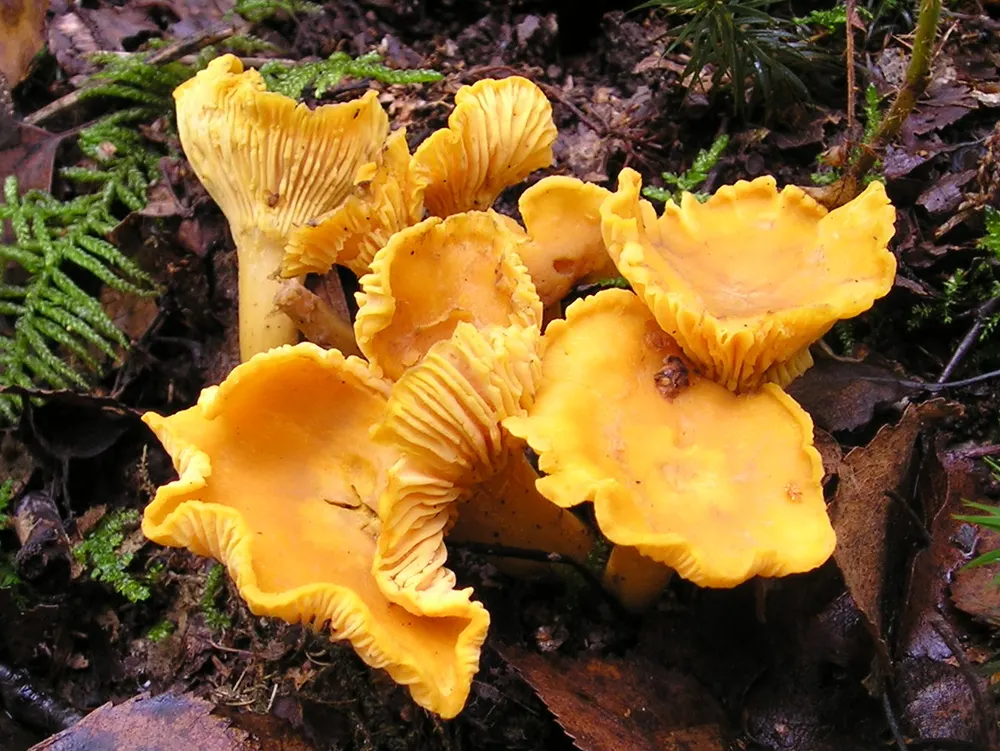
Photo: CC BY-SA 3.0 (via Wikimedia Commons)
Golden Chanterelle
Cantharellus cibarius
Also known as Girolle, Pfifferling, Egg mushroom, Chanterelle
Key benefits
✦Traditional uses
✦Long before it graced fine restaurant menus, the golden chanterelle was a forest treasure gathered by generations of European and North American foragers, who learned to spot its apricot-colored cap glowing against the leaf litter. In old Central European kitchens it was dried on strings above the hearth to carry the taste of autumn woods through winter, and market women in places like Alsace and the Black Forest built whole seasonal trades around the basketfuls they carried down from the hills. Its gentle, fruity aroma and firm, faintly peppery flesh made it a favorite where more delicate mushrooms would fall apart in the pan, and it remains one of the most trusted and sought after wild mushrooms in the world today. Unlike many plants in an herbalist's cabinet, the chanterelle's traditional value lies almost entirely in the kitchen rather than the medicine chest.
How to grow & use it
✦The full apothecary for Golden Chanterelle
Traditional remedies and step-by-step preparations, a complete growing guide, and how to harvest, dry, and store it, all unlocked with HerbLens Unlimited.
- ✦Remedies & preparations
- ✦ Growing guide
- ✦Harvest & storage
From under $6 a month. Free plant identifications always included.
- ✦Thyme
- ✦Parsley
- ✦Garlic
- ✦Hedgehog mushroom
- ✦Oyster mushroom
“When the forest floor smells faintly of apricots after an autumn rain.”
Chanterelles are not true gilled mushrooms at all. What looks like gills underneath the cap are actually shallow, blunt ridges of flesh, forked and vein-like, which is one reason experienced foragers use them to help tell a real chanterelle from its more dangerous look-alikes.
Chanterelles are a prized edible mushroom, but correct identification matters since they have toxic look-alikes such as the jack-o-lantern mushroom, so forage only with an experienced guide. Cook thoroughly and never eat wild mushrooms raw.