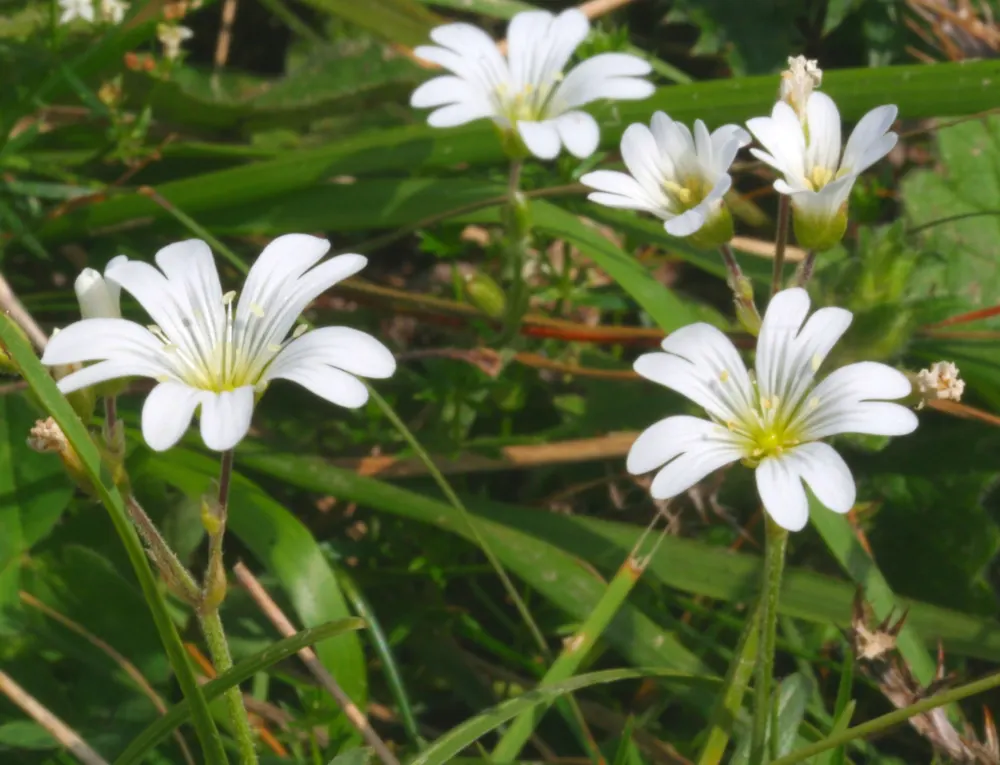
Photo: Enrico Blasutto, CC BY-SA 3.0 (via Wikimedia Commons)
Alpine Mouse-ear
Cerastium alpinum
Also known as Alpine Mouse-ear Chickweed, Alpine Chickweed, Mouse-ear Cerastium
Key benefits
✦Traditional uses
✦Cerastium alpinum has never been a kitchen or medicine chest herb the way its lowland cousin, common chickweed, became. Instead, its story belongs to mountaineers, arctic botanists, and rock gardeners, people who prized it simply for daring to bloom where almost nothing else could. Early plant collectors pressed its small white flowers into herbaria as proof of having reached the harshest, highest ground, and gardeners later brought it down from the peaks to soften stone walls and scree beds with its silvery, felted leaves. Its charm has always been resilience and beauty rather than remedy.
How to grow & use it
✦The full apothecary for Alpine Mouse-ear
Traditional remedies and step-by-step preparations, a complete growing guide, and how to harvest, dry, and store it, all unlocked with HerbLens Unlimited.
- ✦Remedies & preparations
- ✦ Growing guide
- ✦Harvest & storage
From under $6 a month. Free plant identifications always included.
- ✦Saxifraga (rockfoil)
- ✦Sedum (stonecrop)
- ✦Dianthus (alpine pinks)
- ✦Cerastium tomentosum (snow-in-summer, a showier garden relative)
- ✦Arenaria (sandwort)
“For the gardener who wants a little of the high mountains brought down to a stone wall at home.”
Alpine mouse-ear is one of the few flowering plants that manages to bloom on Svalbard, well inside the Arctic Circle, where it hugs the ground in tight cushions to survive winds and cold that would flatten almost anything taller.
Alpine mouse-ear isn't known to be toxic, but it has no real history of being eaten or used medicinally. Don't assume it's safe to forage based on its resemblance to edible relatives like chickweed.