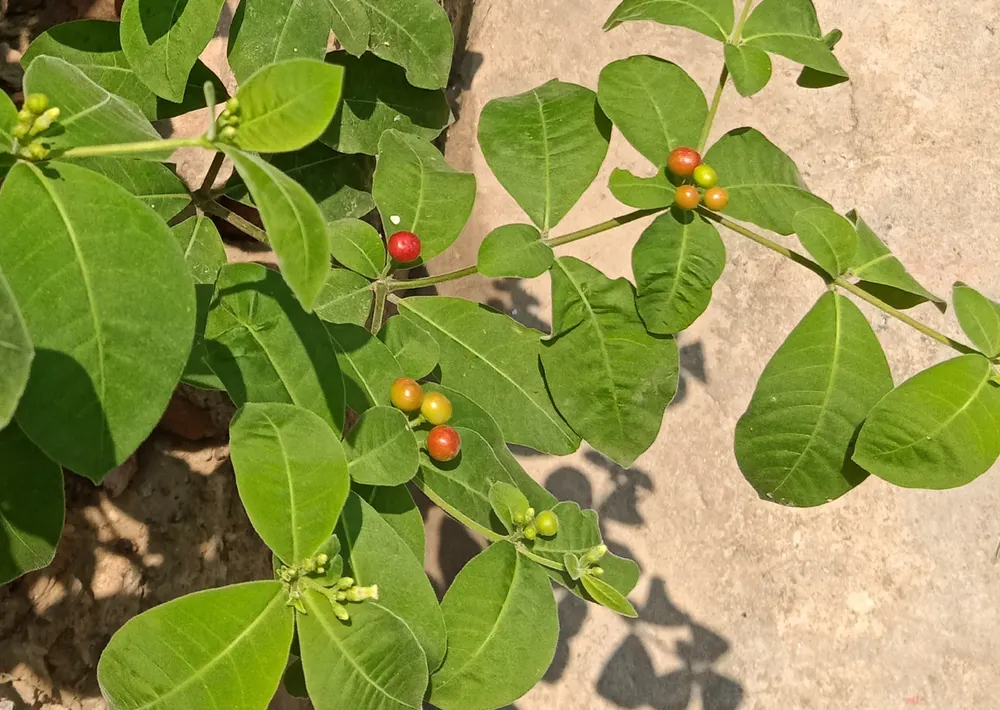
Photo: Billjones94, CC BY-SA 4.0 (via Wikimedia Commons)
Devil Pepper
Rauvolfia tetraphylla
Also known as Be-still tree, Broadleaf devil's pepper, Amapichu, Four-leaved rauvolfia, Miniature snakeroot
Key benefits
✦Traditional uses
✦Rauvolfia tetraphylla is a close cousin of the famed Indian snakeroot, Rauvolfia serpentina, and across its native range in Mexico, Central America, and the Caribbean, healers have long turned to its bitter root for fevers, snakebite, and states of restlessness or high blood pressure. In India, where the plant naturalized centuries ago, it was folded into Ayurvedic practice alongside its more celebrated relative. Its story took a dramatic scientific turn in the twentieth century, when chemists isolated reserpine and related alkaloids from Rauvolfia roots, alkaloids so potent they became some of the earliest pharmaceutical treatments for hypertension and psychiatric agitation, forever changing how modern medicine approached both conditions.
How to grow & use it
✦The full apothecary for Devil Pepper
Traditional remedies and step-by-step preparations, a complete growing guide, and how to harvest, dry, and store it, all unlocked with HerbLens Unlimited.
- ✦Remedies & preparations
- ✦ Growing guide
- ✦Harvest & storage
From under $6 a month. Free plant identifications always included.
- ✦Rauvolfia serpentina (its more studied relative, equally unsuitable for home use)
- ✦Valerian (for traditional calming support under proper guidance)
“A plant better studied from a respectful distance than steeped in a cup.”
Reserpine, one of the powerful alkaloids first isolated from this genus in the 1950s, helped launch the entire field of modern psychopharmacology, and its dramatic blood-pressure-lowering effect is part of why old-time healers called this shrub the be-still tree.
Rauvolfia tetraphylla is not a plant for home teas or self-prepared remedies. Its roots contain reserpine and a complex mix of other indole alkaloids that act powerfully on blood pressure and the nervous system. Historic pharmaceutical use of reserpine has been linked to serious side effects including severe depression, suicidal thoughts, dangerously low blood pressure, slowed heart rate, sedation, nasal congestion, and gastrointestinal ulceration, and it carries dangerous interactions with antidepressants, MAOIs, digoxin, and other heart medications. It should never be used during pregnancy or by anyone with a history of depression, ulcers, or heart conditions. Because the margin between a traditional dose and a harmful one is narrow and unpredictable outside clinical settings, this plant is best appreciated for its remarkable botanical and pharmacological history rather than prepared at home. Please consult a qualified healthcare professional before considering any use of this plant.