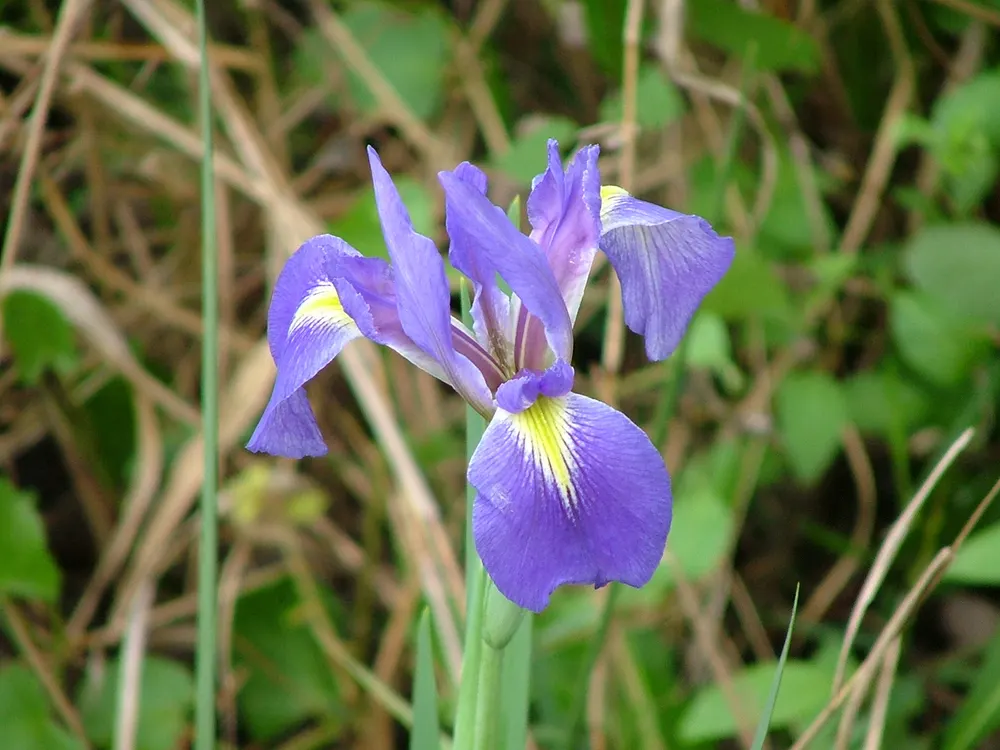
Photo: JaxStrong, Public domain (via Wikimedia Commons)
Dixie Iris
Iris hexagona
Also known as Dixie Iris, Savannah Iris, Six-Angle Iris, New Orleans Iris
Key benefits
✦Traditional uses
✦Iris hexagona, the Dixie Iris, grows wild along the marshes and bayous of the Gulf Coast, where its violet-blue blooms have long marked the arrival of southern spring. It belongs to the same broad group of native irises, alongside Iris fulva and Iris giganticaerulea, that Louisiana gardeners and hybridizers have prized for generations for their color and vigor in wet ground. Some Native communities in the region are recorded as having handled iris rhizomes with great caution for topical and ceremonial purposes, but the plant was never treated as a food or a casual home remedy, and it is best appreciated today for its beauty and its place in wetland ecology rather than for any use on the body.
How to grow & use it
✦The full apothecary for Dixie Iris
Traditional remedies and step-by-step preparations, a complete growing guide, and how to harvest, dry, and store it, all unlocked with HerbLens Unlimited.
- ✦Remedies & preparations
- ✦ Growing guide
- ✦Harvest & storage
From under $6 a month. Free plant identifications always included.
- ✦Pickerelweed
- ✦Cardinal flower
- ✦Louisiana iris hybrids (Iris fulva, Iris giganticaerulea)
- ✦Iris fulva (copper iris)
- ✦Iris giganticaerulea (giant blue iris)
“For the low, wet corner of the garden where the light hits the water just so.”
The species name hexagona comes from the six distinct angles or ridges on the plant's seed capsule, a small architectural detail that gave this marsh-loving iris its name.
Iris rhizomes, including those of Iris hexagona, contain irritant resinous compounds (often referred to as irisin or iridin) that are considered toxic if eaten, and can cause nausea, vomiting, and diarrhea. The sap and rhizome can also irritate the skin and eyes on contact, so gloves are wise when dividing or handling plants. This species has no established record as a safe food or home remedy, and it should be kept away from children, pets, and grazing animals. It is grown for its beauty and habitat value in the garden and wetland, not for ingestion. Anyone considering any medicinal use of an iris species should speak with a qualified healthcare professional first, as this entry is for historical and horticultural reference only.