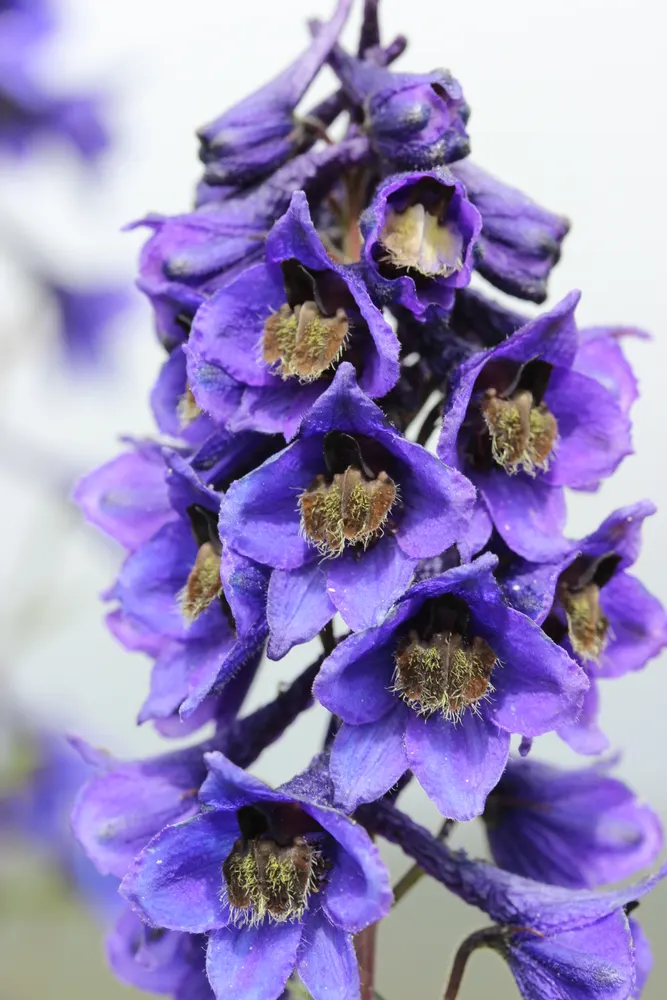
Photo: Björn S., CC BY-SA 3.0 (via Wikimedia Commons)
Candle Larkspur
Delphinium elatum
Also known as Candle Larkspur, Alpine Delphinium, Elatum Delphinium, Bee Larkspur
Key benefits
✦Traditional uses
✦Candle larkspur has never been a kitchen or medicine cabinet herb, its story belongs to the garden and the dye pot instead. European gardeners have prized it since at least the sixteenth century for the rare, true blue of its towering flower spires, a color botanists struggled to breed into most other border plants. Historically, crushed larkspur flowers were steeped to make a blue or violet ink and fabric dye, and farmers in alpine regions learned early and the hard way to fence it away from grazing sheep and cattle. The genus name comes from the Greek word for dolphin, delphis, because the unopened flower bud was thought to resemble a dolphin's arched back and beak.
How to grow & use it
✦The full apothecary for Candle Larkspur
Traditional remedies and step-by-step preparations, a complete growing guide, and how to harvest, dry, and store it, all unlocked with HerbLens Unlimited.
- ✦Remedies & preparations
- ✦ Growing guide
- ✦Harvest & storage
From under $6 a month. Free plant identifications always included.
- ✦Roses
- ✦Lupines
- ✦Peonies
- ✦Foxglove (Digitalis, also ornamental only and toxic, similar vertical spire form)
- ✦Veronica (Speedwell, a non-toxic alternative for a similar tall blue spike)
“For the back border that needs a true blue spire reaching for the sky.”
Ranchers in the Rocky Mountains once called tall larkspur species 'cowbane' because a single afternoon of grazing on the young leaves could kill a full-grown cow, and range managers still map larkspur patches to keep cattle herds away from them each spring.
Every part of Delphinium elatum, root, leaf, seed, and flower, contains toxic diterpenoid alkaloids (including delphinine and methyllycaconitine) and is poisonous if eaten. Ingestion can cause nausea, vomiting, muscle weakness, trembling, irregular heartbeat, and in serious cases respiratory or cardiac failure, and livestock deaths from grazing on larkspur are well documented in mountain pastures. Handling the fresh plant can also irritate sensitive skin, so gloves are wise when cutting stems for a vase. Keep it well away from children, pets, and grazing animals, treat it strictly as an ornamental, and if any part is ever swallowed, contact poison control or a qualified medical professional right away rather than attempting home treatment.