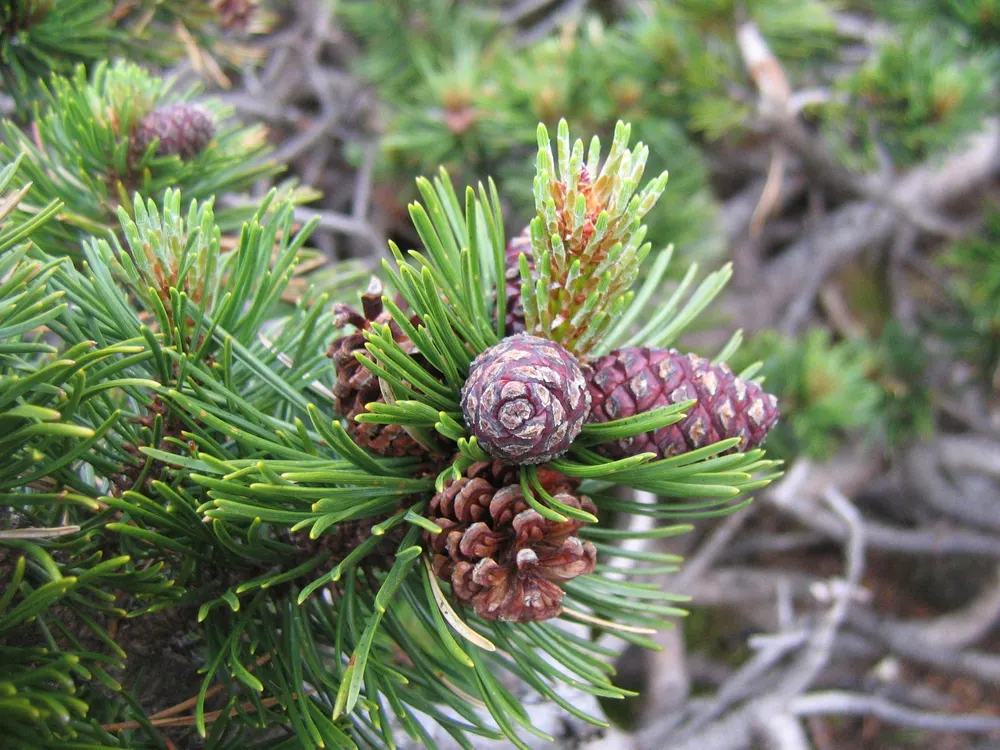
Photo: Agnieszka Kwiecień, Nova, CC BY 2.5 (via Wikimedia Commons)
Mountain Pine
Pinus mugo
Also known as Mugo Pine, Dwarf Mountain Pine, Swiss Mountain Pine, Scrub Mountain Pine
Key benefits
✦Traditional uses
✦Mountain pine grows low and wind-bent across the high slopes of the Alps, where generations of mountain villagers came to know it as both a stubborn survivor of harsh winters and a generous source of fragrant medicine. Alpine herbalists traditionally steeped the young needles and shoot tips into teas and cough syrups to ease breathing through the cold months, while the sticky resin was rendered into balsams for chest rubs and the pine oil worked into liniments for aching muscles after a long day on the mountain. A simple tea of the needles, bright with vitamin C, has also long been sipped as a bracing tonic when the forest air itself seemed to be the remedy.
How to grow & use it
✦The full apothecary for Mountain Pine
Traditional remedies and step-by-step preparations, a complete growing guide, and how to harvest, dry, and store it, all unlocked with HerbLens Unlimited.
- ✦Remedies & preparations
- ✦ Growing guide
- ✦Harvest & storage
From under $6 a month. Free plant identifications always included.
- ✦Thyme
- ✦Eucalyptus
- ✦Elderflower
- ✦Scots Pine
- ✦Spruce Tips
“When the mountain air turns sharp and a cough settles in, reach for the resinous green of mountain pine.”
Unlike most pines that grow tall and straight, mountain pine hugs the ground in a dense, wind-sculpted thicket, an adaptation that lets it shrug off heavy snow loads and even survive being buried under avalanches each winter.
Mountain pine needle tea is fine in modest amounts, but the essential oil should never be taken internally and can irritate skin, so patch test any balm first. Pregnant or nursing women should avoid concentrated mountain pine essential oil.