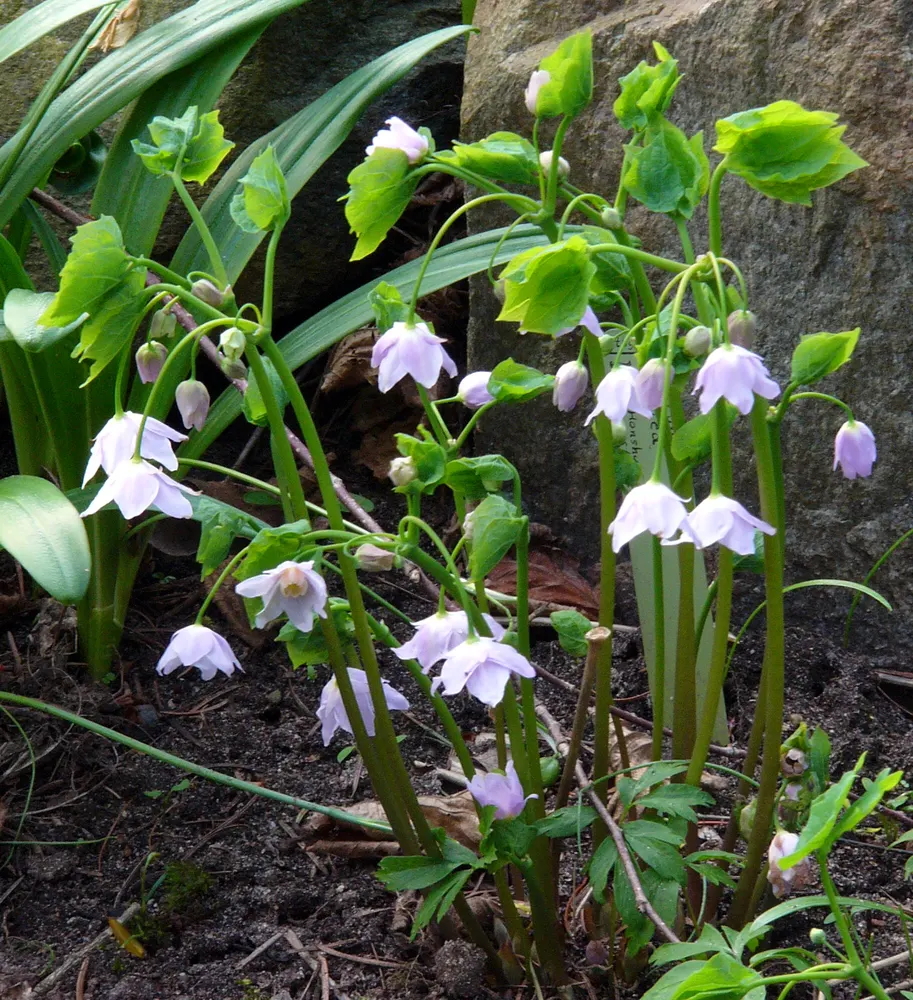
Photo: Goete Svanholm, GFDL 1.2 (via Wikimedia Commons)
Ranzania
Ranzania japonica
Also known as Takashima-ran (Japanese), Japanese Ranzania, Mountain Ranzania
Key benefits
✦Traditional uses
✦Ranzania japonica is a lone, one-of-a-kind genus, the only species of its kind in the entire plant world, tucked quietly into cool mountain forests across Japan. It has never carried the folk-medicine reputation of some of its Berberidaceae cousins, and no historical tea, tonic, or remedy has been passed down using it. Its real legacy is botanical rather than medicinal: for generations, Japanese naturalists and mountain wildflower enthusiasts have treasured the brief, hushed appearance of its waxy blue-violet blossoms each spring as one of the quiet high points of the woodland year. The genus itself carries a tribute to Japan's herbal history in its very name, even though the plant was never part of that tradition.
How to grow & use it
✦The full apothecary for Ranzania
Traditional remedies and step-by-step preparations, a complete growing guide, and how to harvest, dry, and store it, all unlocked with HerbLens Unlimited.
- ✦Remedies & preparations
- ✦ Growing guide
- ✦Harvest & storage
From under $6 a month. Free plant identifications always included.
- ✦Epimedium (as a shade garden companion)
- ✦Trillium (as a shade garden companion)
- ✦Podophyllum, or mayapple (as a shade garden companion)
- ✦Jeffersonia (twinleaf), for a similar early spring woodland presence
- ✦Epimedium, where a hardier and more available shade perennial is needed
“For the hushed, fleeting hour when a Japanese mountain forest exhales its first blue-violet blossoms of spring.”
The genus name Ranzania honors Ono Ranzan (1729-1810), a celebrated Edo-period Japanese herbalist and naturalist whose great catalog of medicinal plants shaped how Japan studied and classified its flora, a fitting namesake even though the plant itself never entered his materia medica.
No established food or medicinal use is documented for Ranzania japonica, and related Berberidaceae plants can contain toxic compounds, so it should not be eaten. It is uncommon and protected in parts of its native range, so leave it growing rather than foraging it.