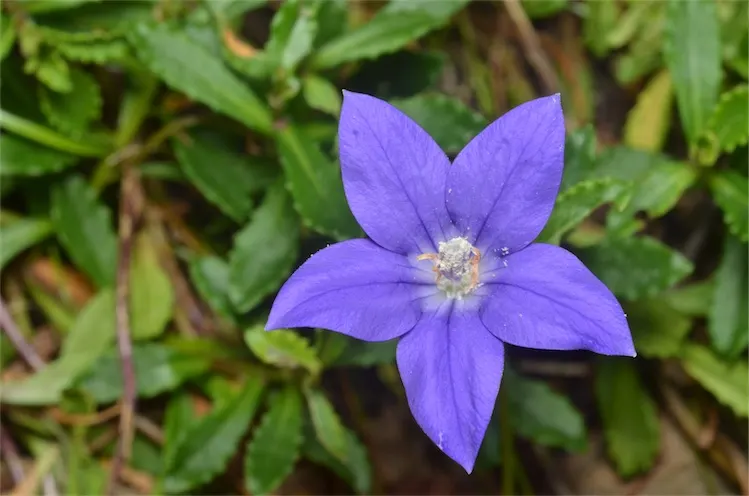
Photo: Murray Fagg, CC BY 3.0 au (via Wikimedia Commons)
Royal Bluebell
Wahlenbergia gloriosa
Also known as Australian Bluebell, Royal Bluebell of the Alps
Key benefits
✦Traditional uses
✦Royal Bluebell has never been a kitchen or medicine cabinet herb. Its real story is one of place and pride: this small nodding wildflower grows wild across the high, wind-scoured meadows of the Australian Alps, in New South Wales, Victoria, and the Australian Capital Territory, where it was named the ACT's official floral emblem in 1982. Early botanists and alpine walkers prized it simply for the way its violet-blue bells seemed to glow against granite and snow grass. Today it is grown far more often in gardens than it is gathered from the wild, valued as a tough, pretty groundcover rather than for any traditional remedy.
How to grow & use it
✦The full apothecary for Royal Bluebell
Traditional remedies and step-by-step preparations, a complete growing guide, and how to harvest, dry, and store it, all unlocked with HerbLens Unlimited.
- ✦Remedies & preparations
- ✦ Growing guide
- ✦Harvest & storage
From under $6 a month. Free plant identifications always included.
- ✦Native grasses like snow grass (Poa species)
- ✦Alpine daisies (Brachyscome species)
- ✦Other low-growing Wahlenbergia species for a similar alpine bluebell look
“For the hush of a mountain meadow, brought down to a garden bed of your own.”
Royal Bluebell was chosen as the floral emblem of the Australian Capital Territory in 1982, making it one of the few Australian state or territory emblems that is a true high-country alpine specialist rather than a lowland plant.
Not used as food or medicine; it is a protected wildflower in parts of its native range, so choose nursery-grown plants rather than digging up wild ones.