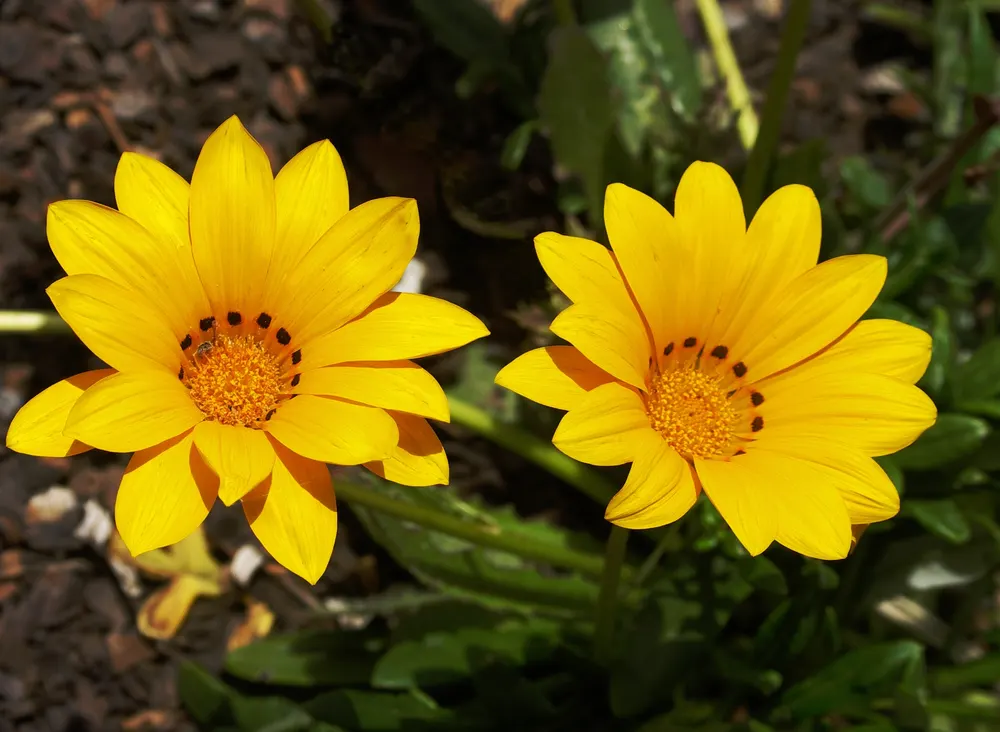
Photo: Alvesgaspar, CC BY 2.5 (via Wikimedia Commons)
Treasure Flower
Gazania rigens
Also known as Gazania, African Daisy, Trailing Gazania, Treasure Flower
Key benefits
✦Traditional uses
✦Gazania rigens hails from the sun-baked coastal flats and rocky slopes of South Africa, where its low, spreading habit and cheerful daisy-like blooms made it a natural fit for stabilizing loose, sandy ground. It found its way into gardens worldwide chiefly for its beauty and toughness rather than any kitchen or medicine chest use, prized as an ornamental that keeps blooming through drought and heat when softer flowers give up. Unlike many of its daisy-family cousins, gazania has no meaningful history as a culinary or medicinal herb, so its story is really a gardener's story, one of color, resilience, and a flower that seems to track the sun like a small, watchful eye.
How to grow & use it
✦The full apothecary for Treasure Flower
Traditional remedies and step-by-step preparations, a complete growing guide, and how to harvest, dry, and store it, all unlocked with HerbLens Unlimited.
- ✦Remedies & preparations
- ✦ Growing guide
- ✦Harvest & storage
From under $6 a month. Free plant identifications always included.
“You want a patch of ground that turns itself into stained glass every time the sun comes out.”
Gazania blossoms are famously light-sensitive, snapping shut within minutes of a cloud passing over and reopening the moment the sun returns, a trait so reliable that old-time gardeners used them as a kind of living weather gauge.
Treasure flower is grown strictly as an ornamental, with no history of food or medicinal use, so it is not eaten or used as a home remedy.