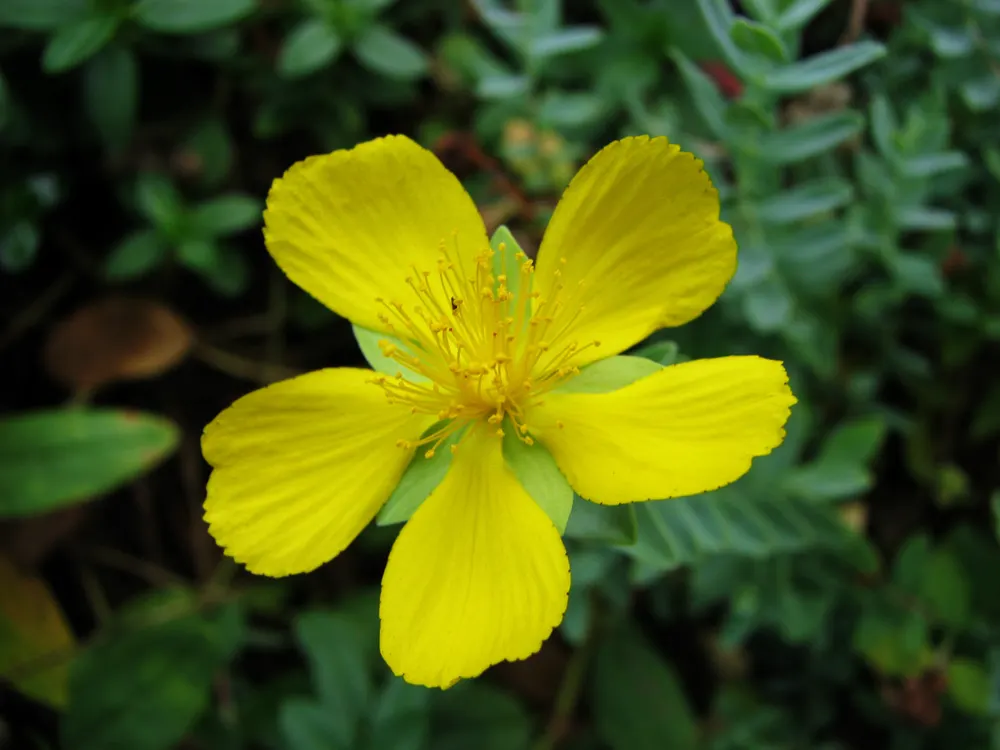
Photo: Agnieszka Kwiecień, Nova, CC BY 3.0 (via Wikimedia Commons)
Olympic St. John's Wort
Hypericum olympicum
Also known as Mount Olympus St. John's Wort, Dwarf St. John's Wort, Golden Hypericum, Olympic Hypericum
Key benefits
✦Traditional uses
✦Olympic St. John's Wort has never carried the herbal reputation of its famous relative, Hypericum perforatum. It belongs to the same golden-flowered genus, but its own story is a horticultural one rather than a medicinal one. European plant collectors brought it down from the rocky heights of Greece and the Balkans in the nineteenth century, prized purely for its cheerful, sun-colored blooms and its willingness to thrive where little else would grow. Rock gardeners have treasured it ever since as a tough, low mat of gold for the hottest, driest, stoniest corners of the garden.
How to grow & use it
✦The full apothecary for Olympic St. John's Wort
Traditional remedies and step-by-step preparations, a complete growing guide, and how to harvest, dry, and store it, all unlocked with HerbLens Unlimited.
- ✦Remedies & preparations
- ✦ Growing guide
- ✦Harvest & storage
From under $6 a month. Free plant identifications always included.
- ✦Creeping thyme
- ✦Sedum
- ✦Lavender
- ✦Hypericum perforatum (common St. John's Wort), the closely related species that carries the well-documented traditional and herbal history this ornamental cousin does not
“You want a patch of mountain gold that asks for almost nothing but sun and stone.”
This little shrub takes its name quite literally from Mount Olympus, where it was first collected clinging to sun-baked limestone crags, close to the mythical home of the Greek gods.
This species is ornamental only, not the St. John's Wort used in supplements (Hypericum perforatum), and should not be ingested. Like related Hypericum species, it can cause photosensitivity in grazing animals that eat large amounts.