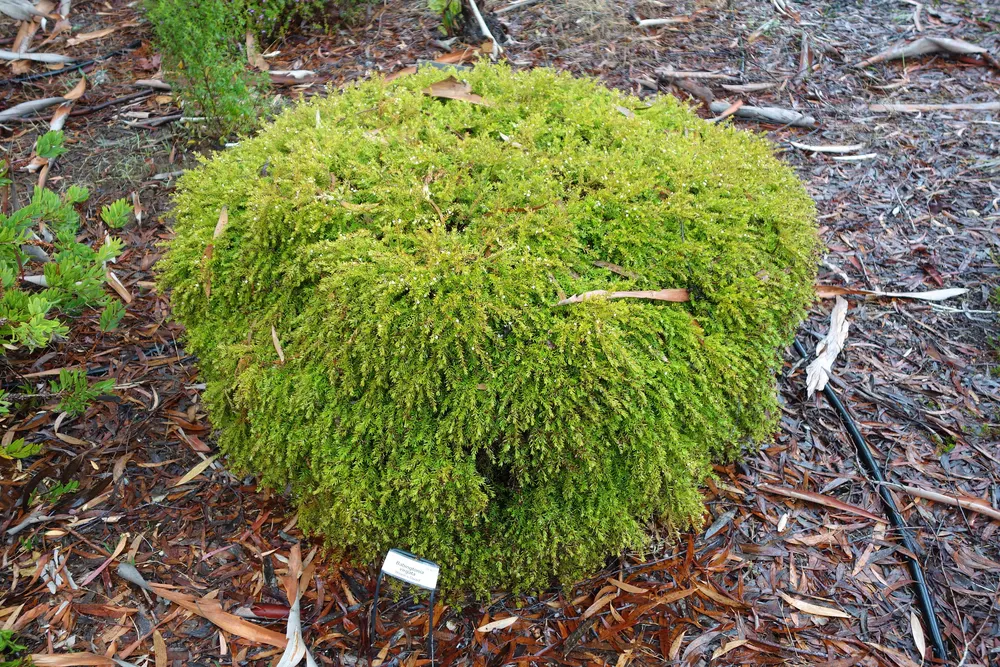
Photo: Daderot, CC0 (via Wikimedia Commons)
Twiggy Baeckea
Baeckea virgata
Also known as Weeping Baeckea, Willow Baeckea, Green Myrtle
Key benefits
✦Traditional uses
✦Baeckea virgata is better known as a garden plant than a medicine chest herb. Its wand-thin, weeping branches (the species name virgata means twiggy, or rod-like) and its confetti of small white flowers have made it a favorite hedge and screening plant in Australian native gardens for generations, prized for the way it moves in the wind and hums with native bees all summer. In parts of its range through Malesia, the crushed, aromatic foliage has seen small-scale local use, and the plant has more recently drawn interest as a source of steam-distilled essential oil valued for its fresh, camphor-like scent. Documentation of any deeper folk medicine tradition for this particular species is thin, so it is honored here mainly as a beloved garden and aromatic plant rather than a well-established internal remedy.
How to grow & use it
✦The full apothecary for Twiggy Baeckea
Traditional remedies and step-by-step preparations, a complete growing guide, and how to harvest, dry, and store it, all unlocked with HerbLens Unlimited.
- ✦Remedies & preparations
- ✦ Growing guide
- ✦Harvest & storage
From under $6 a month. Free plant identifications always included.
- ✦Tea tree (Leptospermum)
- ✦Bottlebrush (Callistemon)
- ✦Coastal rosemary (Westringia)
- ✦Tea tree (Leptospermum)
- ✦Thyme honey-myrtle (Melaleuca thymifolia)
“When you want a hedge that moves like water in the breeze and hums with native bees all summer long.”
The genus Baeckea was named by Linnaeus himself, in honor of his friend and personal physician Abraham Bäck, an 18th-century Swedish doctor who championed the study of native plants.
Twiggy baeckea is not eaten or brewed; its essential oil is for diluted external or aromatic use only and should be kept away from children and pets.