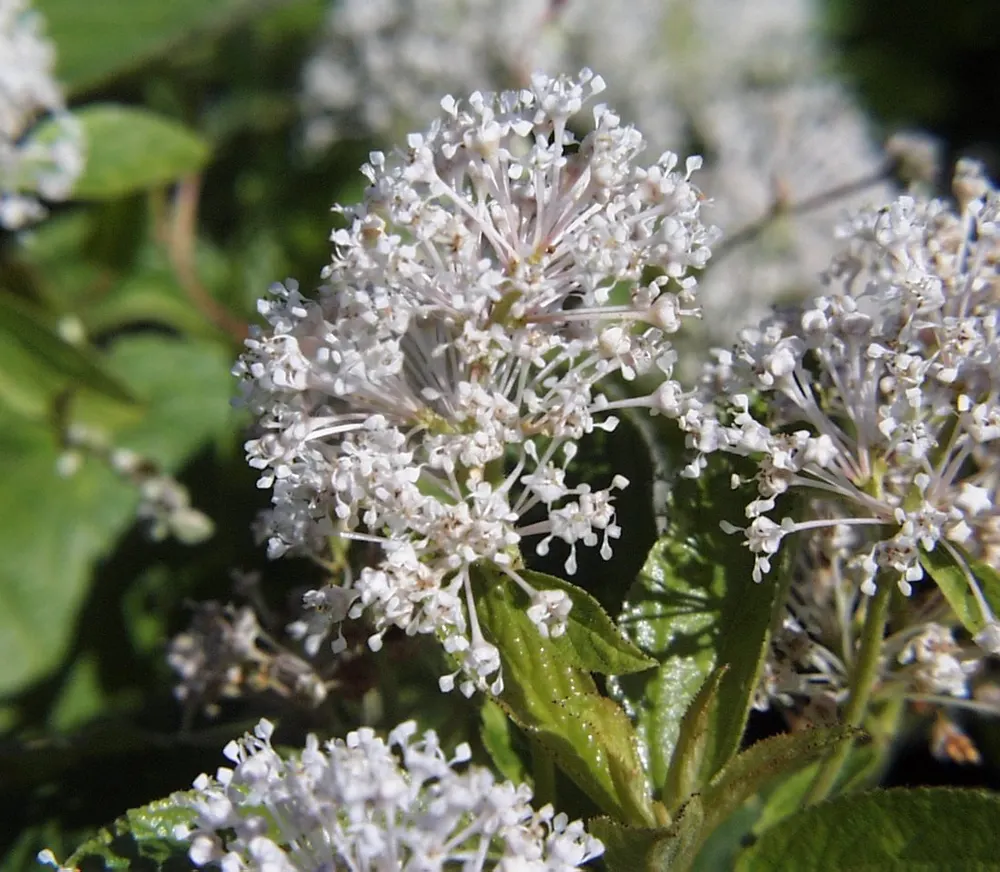
Photo: unknown author, USFWS, Public domain (via Wikimedia Commons)
New Jersey Tea
Ceanothus americanus
Also known as Redroot, Mountain Sweet, Wild Snowball, Walpole Tea
Key benefits
✦Traditional uses
✦New Jersey Tea earned its name during the American Revolution, when colonists boycotting British tea turned to its dried leaves for a homegrown, caffeine-free brew that reminded them of the real thing. Long before that, Native American nations, including the Cherokee and Menominee, had already been using the plant's reddish roots and root bark as a wash for sores and a remedy for coughs and throat complaints. The root's deep red color and astringent bite made it a favorite for supporting the lymphatic system and calming irritated tissue, a use that carried into nineteenth century American herbal medicine. It remains a quiet, homespun herb, more a part of household tradition than modern commerce.
How to grow & use it
✦The full apothecary for New Jersey Tea
Traditional remedies and step-by-step preparations, a complete growing guide, and how to harvest, dry, and store it, all unlocked with HerbLens Unlimited.
- ✦Remedies & preparations
- ✦ Growing guide
- ✦Harvest & storage
From under $6 a month. Free plant identifications always included.
- ✦Red Clover
- ✦Cleavers
- ✦Echinacea
- ✦Cleavers
- ✦Calendula
“For a homespun, honey-colored cup with a story older than the country itself.”
During the Revolutionary War, when imported tea was scarce and unpatriotic, colonial households across the American Northeast steeped New Jersey Tea leaves so often as a substitute that the plant's common name has stuck ever since, even though it grows across most of the eastern half of the continent, not just New Jersey.
New Jersey Tea root has traditionally been linked to effects on blood clotting, so avoid it with blood-thinning medication or a bleeding disorder, and stop use before surgery. The root is also best avoided in pregnancy and breastfeeding.