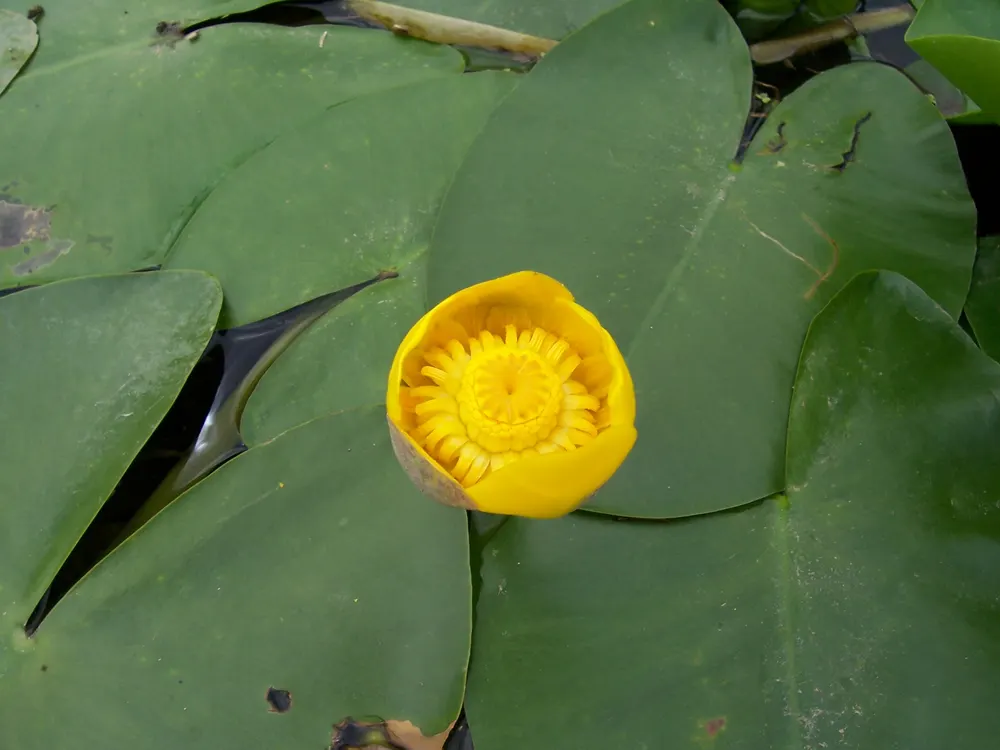
Photo: CC BY-SA 2.0 de (via Wikimedia Commons)
Yellow Pond-lily
Nuphar lutea
Also known as Spatterdock, Brandy-bottle, Yellow Water-lily, Cow Lily, Candock
Key benefits
✦Traditional uses
✦Long before it graced ornamental garden ponds, the yellow pond-lily was known to wetland-dwelling peoples across North America and Europe, who dug its thick, starchy rhizome and used it as an astringent poultice for wounds, boils, and swelling, and in small folk preparations meant to cool ardor rather than kindle it, earning it old country nicknames tied to that very purpose. Its dense mat of roots was also prized for the tannins it yielded, once used in tanning hides and producing a dark dye. Because the plant carries its own natural chemistry that can affect the heart and nervous system, these historical uses were always handled with real caution, and the rhizome was never treated as an everyday remedy.
How to grow & use it
✦The full apothecary for Yellow Pond-lily
Traditional remedies and step-by-step preparations, a complete growing guide, and how to harvest, dry, and store it, all unlocked with HerbLens Unlimited.
- ✦Remedies & preparations
- ✦ Growing guide
- ✦Harvest & storage
From under $6 a month. Free plant identifications always included.
- ✦White water lily (Nymphaea alba) for contrast in bloom color
- ✦Pickerelweed for vertical interest at the pond edge
- ✦Arrowhead for a natural marginal planting
- ✦White water lily (Nymphaea alba), a botanical relative sometimes grown alongside it in restored wetlands
“For the hush of still water and a raft of gold blooms at the height of summer.”
The yellow pond-lily's flowers give off a faint boozy, wine-like scent, which is exactly what earned it the old nickname brandy-bottle, and that fermented aroma is thought to be part of what draws the beetles that pollinate it.
Yellow pond-lily is toxic, with alkaloids concentrated in the rhizome that affect the heart and nervous system. Do not eat, brew, or otherwise ingest any part of this plant, and keep it away from children and pets.