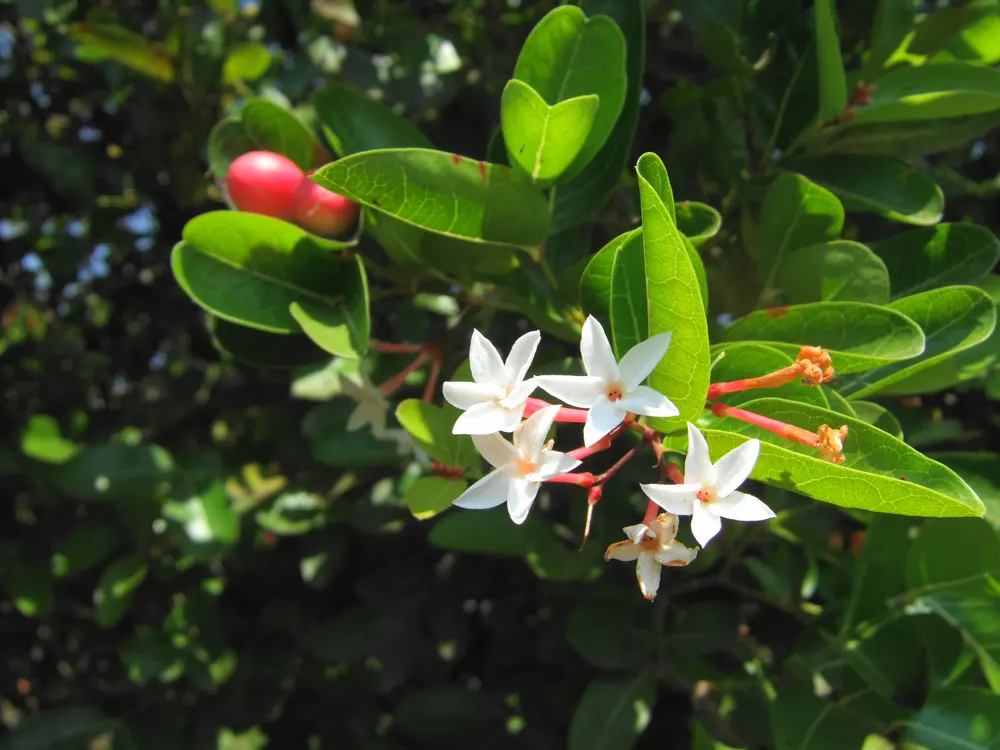
Photo: Sakurai Midori, CC BY-SA 3.0 (via Wikimedia Commons)
Karonda
Carissa carandas
Also known as Karanda, Bengal Currant, Christ's Thorn, Carandas Plum, Karamardaka
Key benefits
✦Traditional uses
✦In villages across India, karonda has long grown as a living fence, its thorny branches keeping goats out of the garden while its fruit fed the household. The unripe, sour berries have traditionally been used to sharpen a sluggish appetite and ease digestion, most often pickled with salt, chili, and mustard oil. As the fruit ripens to a deep purple-black, it turns sweet enough to eat out of hand, and was traditionally valued as a seasonal source of vitamin C during the hot months. In Ayurvedic household practice, leaf and root preparations have traditionally been used for fevers and minor skin complaints, though these uses were always folk remedies rather than clinical treatments.
How to grow & use it
✦The full apothecary for Karonda
Traditional remedies and step-by-step preparations, a complete growing guide, and how to harvest, dry, and store it, all unlocked with HerbLens Unlimited.
- ✦Remedies & preparations
- ✦ Growing guide
- ✦Harvest & storage
From under $6 a month. Free plant identifications always included.
- ✦Ginger
- ✦Mint
- ✦Cumin
- ✦Amla (Indian gooseberry)
- ✦Cranberry
“When a hedge needs guarding and a pantry needs pickling, karonda offers both in one thorny, fruit-laden branch.”
Despite its common name of Bengal currant, karonda is not a true currant at all; it belongs to the dogbane family and is a close cousin of the South African Natal plum, sharing that same milky sap and thorny, hedge-forming habit.
Unripe fruit contains a milky latex that can irritate the mouth, so it's traditionally cooked or pickled rather than eaten raw; ripe fruit is fine as is. Root preparations have traditionally been used to bring on labor, so avoid the root entirely in pregnancy.