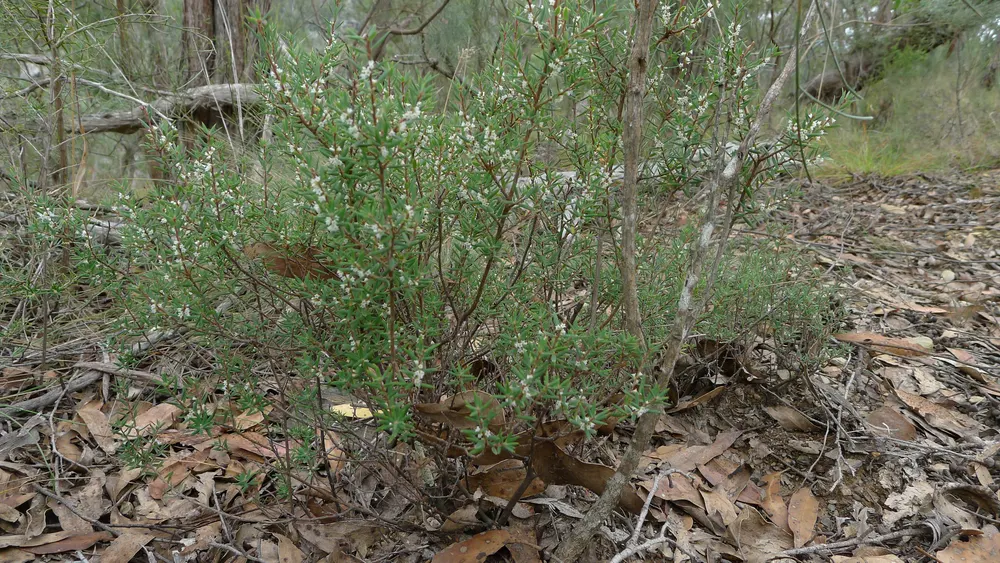
Photo: John Tann from Sydney, Australia, CC BY 2.0 (via Wikimedia Commons)
Prickly Broom Heath
Monotoca scoparia
Also known as Broom Heath, Prickly Broom-heath
Key benefits
✦Traditional uses
✦Prickly Broom Heath does not carry a documented history as a medicinal or culinary herb the way many plants in this atlas do. Its real story is written into the ecology of Australia's heathlands, where its dense, spine-tipped branches have long formed a wiry understorey that shelters small birds, lizards, and insects from wind and predators. The small fruits that follow its modest white flowers are taken up by birds and other wildlife, making the shrub a quiet but steady contributor to the heath's food web rather than a plant gathered for the herbalist's basket. It is included here as a botanical curiosity, a reminder that not every plant's value lies in a cup of tea, some simply hold the ground together.
How to grow & use it
✦The full apothecary for Prickly Broom Heath
Traditional remedies and step-by-step preparations, a complete growing guide, and how to harvest, dry, and store it, all unlocked with HerbLens Unlimited.
- ✦Remedies & preparations
- ✦ Growing guide
- ✦Harvest & storage
From under $6 a month. Free plant identifications always included.
“For the wiry, quietly stubborn little shrub that holds the wild heath together underfoot.”
Prickly Broom Heath belongs to the same broad family, Ericaceae, as blueberries and rhododendrons, though you would never guess it from its stiff, spine-tipped little leaves. Those sharp leaf tips are an adaptation to the nutrient-starved, fire-prone soils of Australian heathland, where toughness matters more than showiness.
Monotoca scoparia has no tradition of being eaten and no safety data exists for internal use. It belongs to the heath family, which includes several genuinely toxic plants, so don't assume it's safe to ingest.