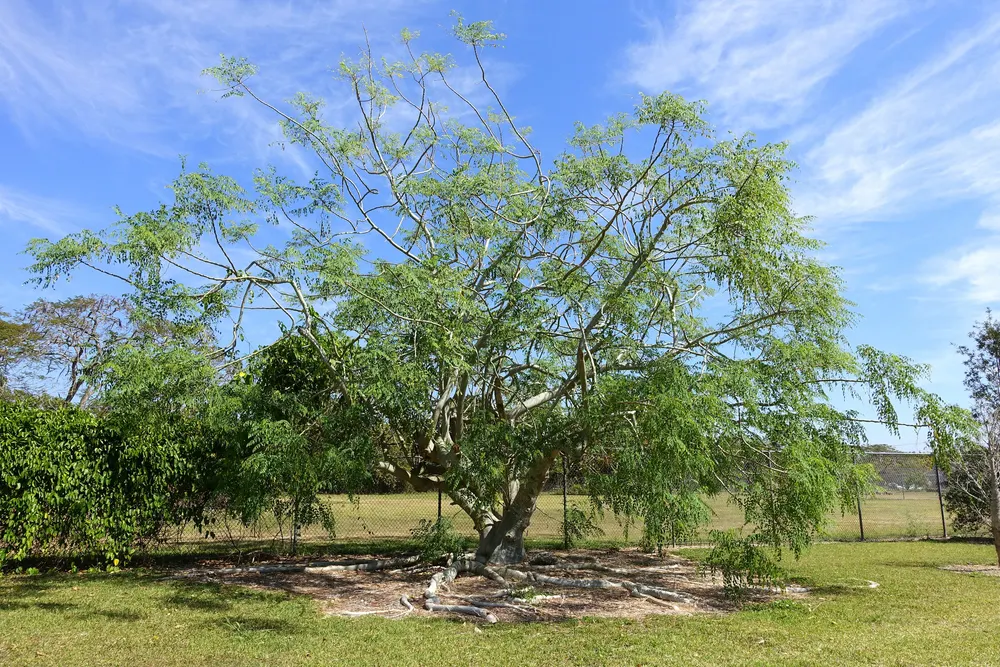
Photo: Daderot, CC0 (via Wikimedia Commons)
African Moringa
Moringa stenopetala
Also known as Cabbage Tree, Ethiopian Moringa, Shiferaw, Haleko
Key benefits
✦Traditional uses
✦Among the Konso and Gamo Gofa peoples of southern Ethiopia, this broad-leafed tree has long been treasured as a food security crop, one that keeps producing tender greens through the dry months when other vegetables fail. The leaves are cooked much like collards or spinach and folded into daily meals as a reliable source of nourishment. Traditional healers in the region have also used leaf and flower preparations as general tonics for vitality and to support the body during illness, though these uses were always folded into daily food ways rather than treated as separate medicine. Its resilience in poor, dry soil earned it a lasting place as a tree families could depend on.
Growing guide
✦Fresh to dried
✦Traditional preparations
✦Moringa Leaf Tea
A mild, grassy tea traditionally taken as a daily tonic, made from the dried leaves of the tree.
How it's made. Steep 1 teaspoon of dried, crumbled moringa leaf in 250 ml of just-boiled water for 5 to 10 minutes, then strain and drink.
Green Leaf Powder Stir-In
A simple way dried moringa leaf has traditionally been folded into porridge, soups, or drinks to boost the nutritional value of a daily meal.
How it's made. Stir 1/2 teaspoon of dried moringa leaf powder into warm porridge, soup, or a glass of water or juice.
- ✦Lemongrass
- ✦Ginger
- ✦Hibiscus
- ✦Moringa oleifera leaf
- ✦Kale (for culinary use)
“For the hardy, leaf-rich tree that feeds a household through the driest season.”
In the Konso highlands, this tree is planted so reliably around homesteads that it has earned a reputation as a famine-fighting tree, one that keeps families fed with greens even when seasonal crops fail during drought.
Only the leaves, flowers, and young pods are traditionally eaten; the root and root bark contain compounds considered unsafe to ingest and should be avoided. Concentrated leaf preparations may affect blood sugar, blood pressure, or thyroid function, so anyone on related medication should be cautious.