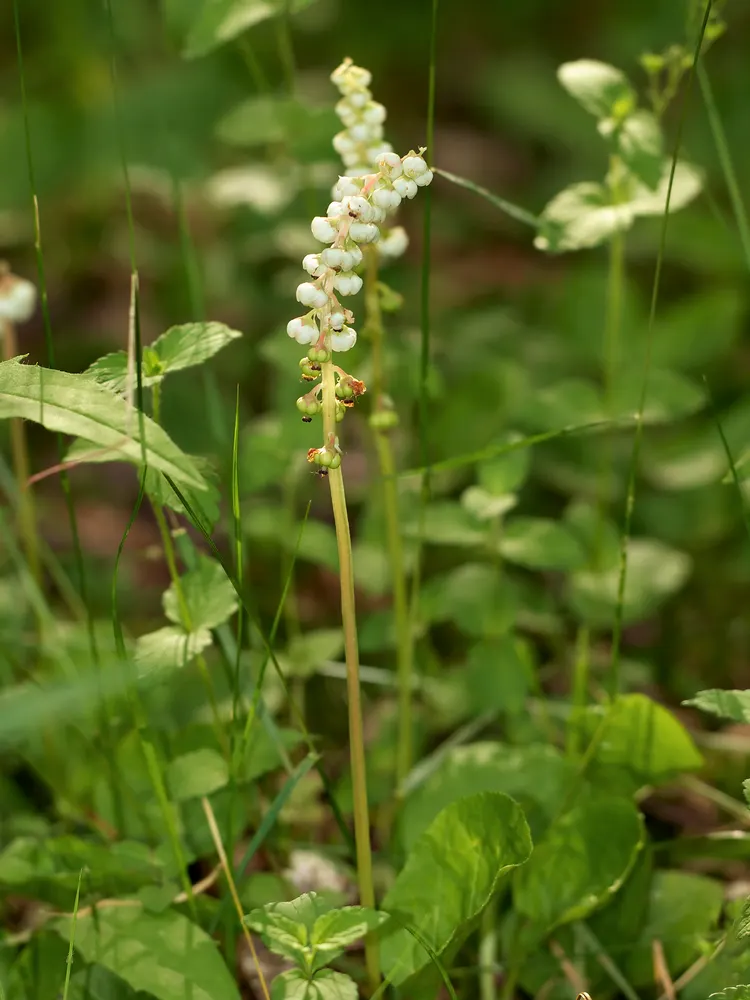
Photo: Jörg Hempel, CC BY-SA 3.0 de (via Wikimedia Commons)
Lesser Wintergreen
Pyrola minor
Also known as Snowline Wintergreen, Common Wintergreen (Europe), Small Pyrola
Key benefits
✦Traditional uses
✦Lesser Wintergreen is a quiet, easily overlooked plant of the deep forest floor, and its own recorded history is thinner than that of its showier relatives. It belongs to the same small family of pyrolas that European and North American folk herbalists once gathered for their astringent, cooling leaves, pressed or chewed fresh and laid over cuts, bruises, and minor skin irritations to ease discomfort while they healed. Because it so often grows tangled among other wintergreens and shares their general character, it was likely used somewhat interchangeably with them in old forest lore, though it never became a widely traded or well documented herb in its own right. What survives today is less a settled tradition than a quiet thread of woodland folk practice, worth honoring for its modesty rather than for any grand reputation.
How to grow & use it
✦The full apothecary for Lesser Wintergreen
Traditional remedies and step-by-step preparations, a complete growing guide, and how to harvest, dry, and store it, all unlocked with HerbLens Unlimited.
- ✦Remedies & preparations
- ✦ Growing guide
- ✦Harvest & storage
From under $6 a month. Free plant identifications always included.
- ✦Plantain (Plantago major)
- ✦Self-heal (Prunella vulgaris)
- ✦Pipsissewa (Chimaphila umbellata)
- ✦Plantain leaf
- ✦Pipsissewa leaf
“For the quiet green tucked beneath the pines, easy to walk past and worth kneeling down to notice.”
The genus name Pyrola comes from the Latin pyrus, or pear tree, because early botanists thought the plant's small, rounded, glossy leaves looked like miniature pear leaves.
Lesser wintergreen contains arbutin, a compound that carries liver and kidney cautions with internal use, so it's avoided by pregnant or nursing women, young children, and anyone with liver or kidney conditions. It's also easily confused with other low woodland evergreens, so correct identification matters.