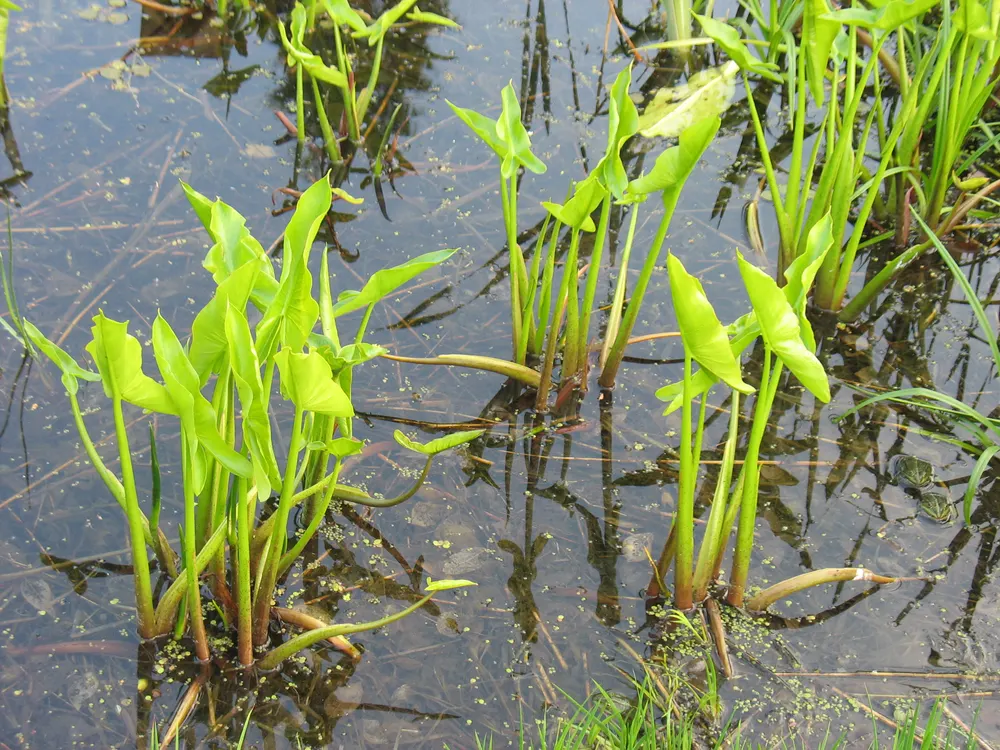
Photo: Miguel Andrade, Public domain (via Wikimedia Commons)
Arrow Arum
Peltandra virginica
Also known as Green Arrow Arum, Tuckahoe, Virginia Arrow Arum
Key benefits
✦Traditional uses
✦Arrow arum is better known as a food story than a medicine chest, and a dramatic one at that. The Powhatan and other Algonquian-speaking peoples of the mid-Atlantic called its starchy root tuckahoe, and it became a vital staple in lean seasons, so important that early colonial writers recorded whole communities gathering it from the marshes. What made it remarkable was the work it demanded, because the raw root is armed with needle-sharp calcium oxalate crystals that make it unfit to eat straight from the mud. Only after being dried for weeks, or roasted and pounded, did it become a safe, nourishing bread flour, a transformation that speaks to generations of careful, hard-won plant knowledge rather than a quick kitchen or medicine cabinet remedy.
How to grow & use it
✦The full apothecary for Arrow Arum
Traditional remedies and step-by-step preparations, a complete growing guide, and how to harvest, dry, and store it, all unlocked with HerbLens Unlimited.
- ✦Remedies & preparations
- ✦ Growing guide
- ✦Harvest & storage
From under $6 a month. Free plant identifications always included.
- ✦Pickerelweed
- ✦Blue flag iris
- ✦Cardinal flower
“For the wild green sculpture of a marsh edge, not for the teacup.”
Arrow arum's nickname tuckahoe was so tied to survival in old Virginia marshlands that it lent its name to towns, creeks, and country roads across the region, a quiet echo of a plant that once meant the difference between a hungry winter and a fed one.
All parts of arrow arum, especially the fresh root and leaves, contain sharp needle-like calcium oxalate crystals that cause intense burning, swelling, and irritation of the mouth, throat, and digestive tract if eaten raw or improperly prepared. This is not a plant for home foraging, tea, or tincture use. Historical food preparation required extensive, specialized drying or cooking that is not safely replicated in an ordinary kitchen. Keep it out of reach of curious pets and children who might chew on the leaves or roots, and admire this plant in the garden or wetland rather than the kitchen. As always, speak with a qualified healthcare professional or a trained regional forager before considering any wild plant as food or medicine.