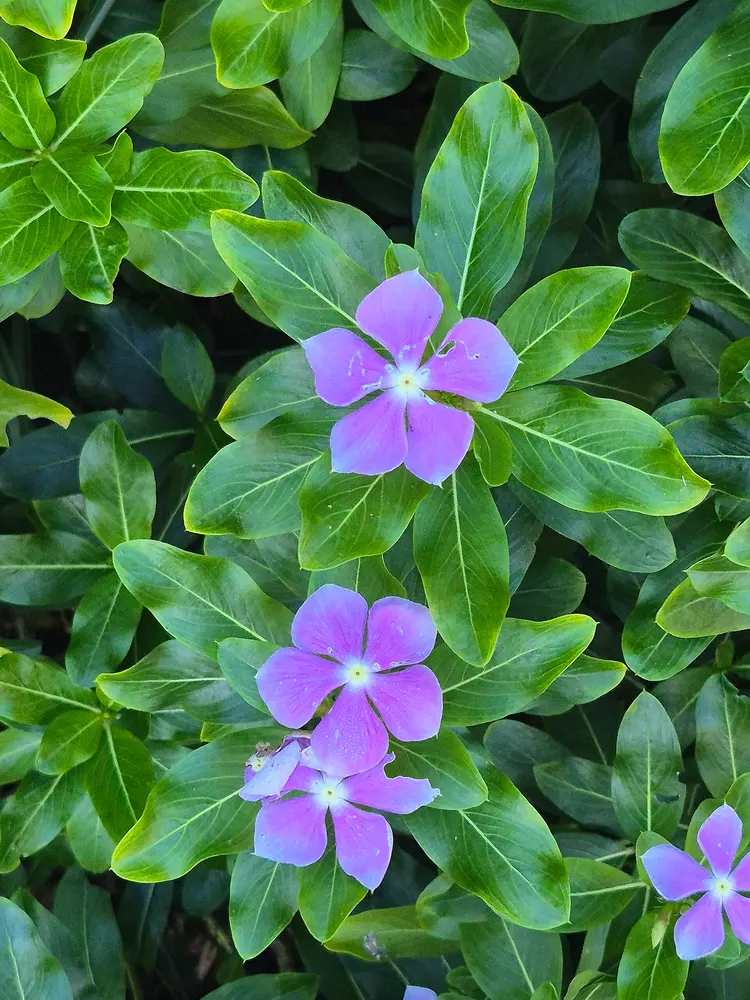
Photo: O Tupinólogo, CC BY 4.0 (via Wikimedia Commons)
Madagascar Periwinkle
Catharanthus roseus
Also known as Vinca, Rosy Periwinkle, Cape Periwinkle, Old Maid, Bright Eyes
Key benefits
✦Traditional uses
✦Long before laboratories took an interest, Madagascar periwinkle held a place in folk medicine across many cultures, from Ayurvedic and traditional Chinese practice to Caribbean and West African herbal traditions, where it was used for complaints ranging from diabetes to wasp stings. It was that folk reputation for lowering blood sugar that first drew pharmaceutical researchers to study the plant in the 1950s. What they found instead reshaped modern oncology: two alkaloids from its leaves, vincristine and vinblastine, became foundational chemotherapy medicines still used today. It stands as one of the great reminders that traditional plant knowledge can point science toward remarkable discoveries, even when the original use and the eventual one turn out to be entirely different.
How to grow & use it
✦The full apothecary for Madagascar Periwinkle
Traditional remedies and step-by-step preparations, a complete growing guide, and how to harvest, dry, and store it, all unlocked with HerbLens Unlimited.
- ✦Remedies & preparations
- ✦ Growing guide
- ✦Harvest & storage
From under $6 a month. Free plant identifications always included.
“Let this one live in the flower bed, not the teacup.”
This cheerful little bedding plant quietly changed cancer treatment. Researchers studying its traditional use for diabetes in Madagascar and the Caribbean instead found two powerful alkaloids, vincristine and vinblastine, which became cornerstones of modern chemotherapy for leukemia and lymphoma. It takes roughly a ton of dried leaves to yield just a few grams of pure vincristine, which is part of why the drug remains so costly to produce.
Every part of Catharanthus roseus, root, stem, leaf, and flower, contains potent toxic alkaloids and should never be eaten, brewed into tea, or prepared as a home remedy. Ingestion can cause severe nausea and vomiting, dangerously low blood pressure, nerve damage, and suppression of bone marrow and blood cell production; it is also toxic to dogs, cats, and grazing livestock. The sap can irritate skin and eyes on contact, so wear gloves when handling or pruning the plant. The vincristine and vinblastine derived from this species are genuine, life-saving chemotherapy drugs, but they are produced under strict pharmaceutical extraction and administered only by oncology professionals in carefully calculated, monitored doses; there is no safe way to replicate this at home. Pregnant or nursing individuals, children, and pets should be kept away from any part of this plant. Grow it for its beauty and its remarkable history, and always consult a qualified medical professional before using any plant-derived treatment.