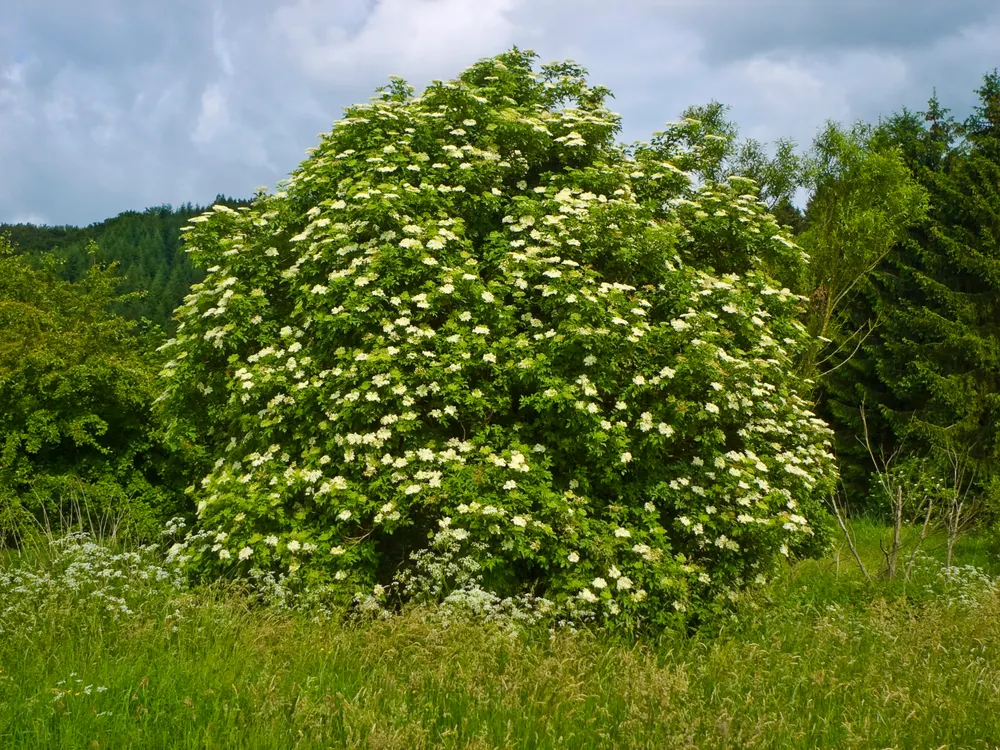
Photo: Willow, CC BY 2.5 (via Wikimedia Commons)
Elderberry
Sambucus nigra
Also known as Black Elder, European Elder, Elderflower, Boor Tree, Pipe Tree
Key benefits
✦Traditional uses
✦Elderberry has been steeped in folklore for centuries, so entwined with village life across Europe that old customs held you should ask the tree's permission before cutting its wood. Grandmothers in nearly every European country kept a bottle of elderberry cordial or syrup on hand for the first sniffle of the season, and the flowers were just as prized, dried by the basketful for the cool, floral tea brought out when a cold settled in. The berries and blossoms traveled with settlers to North America, where the native black elder's cousin, Sambucus canadensis, was folded into much the same household repertoire.
How to grow & use it
✦The full apothecary for Elderberry
Traditional remedies and step-by-step preparations, a complete growing guide, and how to harvest, dry, and store it, all unlocked with HerbLens Unlimited.
- ✦Remedies & preparations
- ✦ Growing guide
- ✦Harvest & storage
From under $6 a month. Free plant identifications always included.
- ✦Echinacea
- ✦Yarrow
- ✦Peppermint
- ✦Hibiscus (for tartness and color)
- ✦Linden flower (for a gentler floral tea)
“For the cordial warmth of a well-worn folk remedy, steeped and simmered the way grandmothers always did.”
In old English and Scandinavian folklore, the elder tree was believed to be home to a protective spirit called the Elder Mother, and it was considered bad luck to burn its wood or cut a branch without first asking her leave.
Raw or unripe elderberries, along with the leaves, bark, stems, and seeds, contain cyanogenic glycosides and can cause nausea and vomiting if eaten; only fully ripe, cooked berries and dried flowers are used traditionally. It's best avoided during pregnancy without guidance, and because it may stimulate the immune system, caution is warranted with autoimmune conditions or immunosuppressant medication.