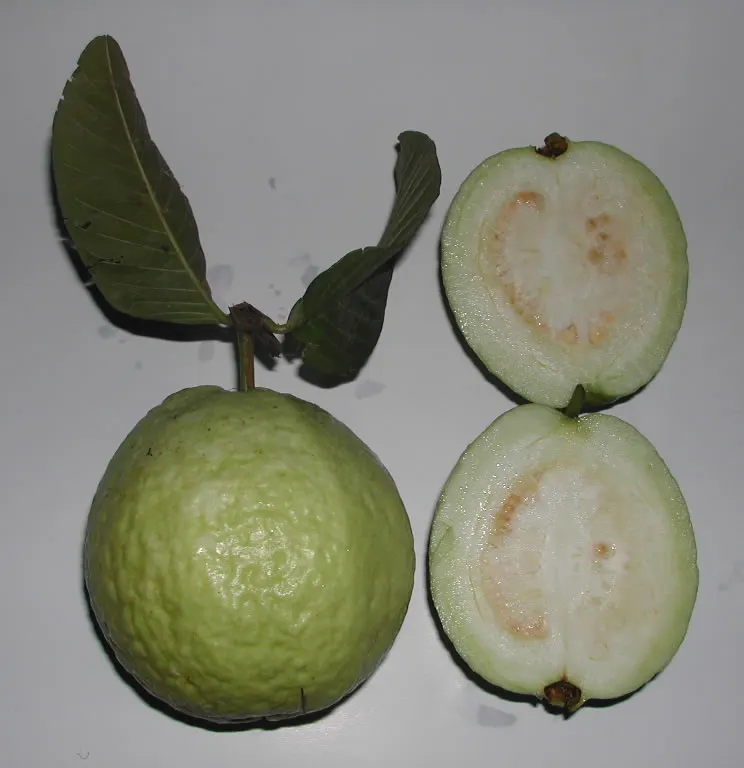
Photo: CC BY-SA 3.0 (via Wikimedia Commons)
Guava
Psidium guajava
Also known as Common Guava, Yellow Guava, Apple Guava, Goiaba (Portuguese), Guayaba (Spanish)
Key benefits
✦Traditional uses
✦Long before it traveled the world in fruit bowls, guava was already a household plant across Central and South America, where communities steeped its young leaves into a simple, astringent tea to settle an upset stomach after meals. As the tree spread through the Caribbean, Africa, and Asia in the wake of trade and colonization, folk healers in many of these regions adopted the same leaf tea, and it also became a common home gargle for minor mouth and throat irritation. The fruit itself, soft, fragrant, and full of small seeds, was treasured simply as a generous source of vitamin C long before that nutrient had a name.
How to grow & use it
✦The full apothecary for Guava
Traditional remedies and step-by-step preparations, a complete growing guide, and how to harvest, dry, and store it, all unlocked with HerbLens Unlimited.
- ✦Remedies & preparations
- ✦ Growing guide
- ✦Harvest & storage
From under $6 a month. Free plant identifications always included.
- ✦Fresh mint
- ✦Ginger root
- ✦Cinnamon bark
- ✦Blackberry leaf
- ✦Raspberry leaf
“When the day feels unsettled in the belly and you want something gentle, green, and grown for centuries at village edges to calm it.”
Ounce for ounce, ripe guava fruit typically carries several times more vitamin C than an orange, which is part of why sailors and colonists in the tropics prized the tree wherever it took root.
Guava is a safe, common fruit; the leaf tea has been studied for lowering blood sugar, so those on diabetes medication should watch for an added effect.