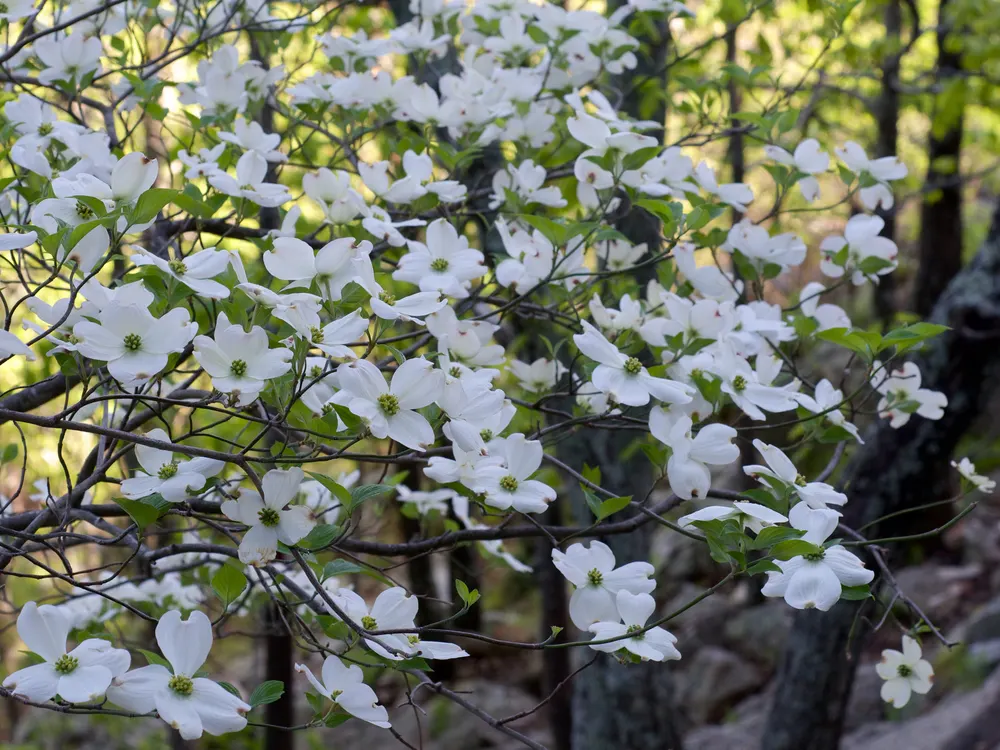
Photo: Eric Hunt, CC BY-SA 4.0 (via Wikimedia Commons)
Flowering Dogwood
Cornus florida
Also known as American Dogwood, White Cornel, Boxwood, False Box
Key benefits
✦Traditional uses
✦Long before it graced suburban front yards, flowering dogwood's bark was a trusted fever remedy among Native American peoples and early American settlers alike, who simmered it into a bitter decoction much as their European counterparts used cinchona bark from South America. It became especially prized during periods when true quinine was scarce or unaffordable, earning it a quiet reputation as the poor family's fever bark. The astringent inner bark was also steeped for digestive upset and used as a general tonic to restore strength after illness. Today it is remembered more for its role in American folk medicine history than as an active remedy, but its story still runs deep through Appalachian and Southern herbal traditions.
How to grow & use it
✦The full apothecary for Flowering Dogwood
Traditional remedies and step-by-step preparations, a complete growing guide, and how to harvest, dry, and store it, all unlocked with HerbLens Unlimited.
- ✦Remedies & preparations
- ✦ Growing guide
- ✦Harvest & storage
From under $6 a month. Free plant identifications always included.
- ✦Willow bark
- ✦Boneset
- ✦Elderflower
- ✦Cinchona (quinine) bark
- ✦Willow bark
“When the spring woods turn white with bracts, and you want a tree whose roots run as deep into American folk history as they do into the forest floor.”
During the Civil War, when the Union naval blockade cut off supplies of imported quinine bark, Confederate physicians reportedly turned to flowering dogwood bark tea as a homegrown substitute for treating malarial fevers among soldiers.
Fresh dogwood bark can cause nausea and vomiting, which is why traditional use dried and aged it a full year before preparation. The bright red berries aren't eaten by people; they're bitter and can upset the stomach.