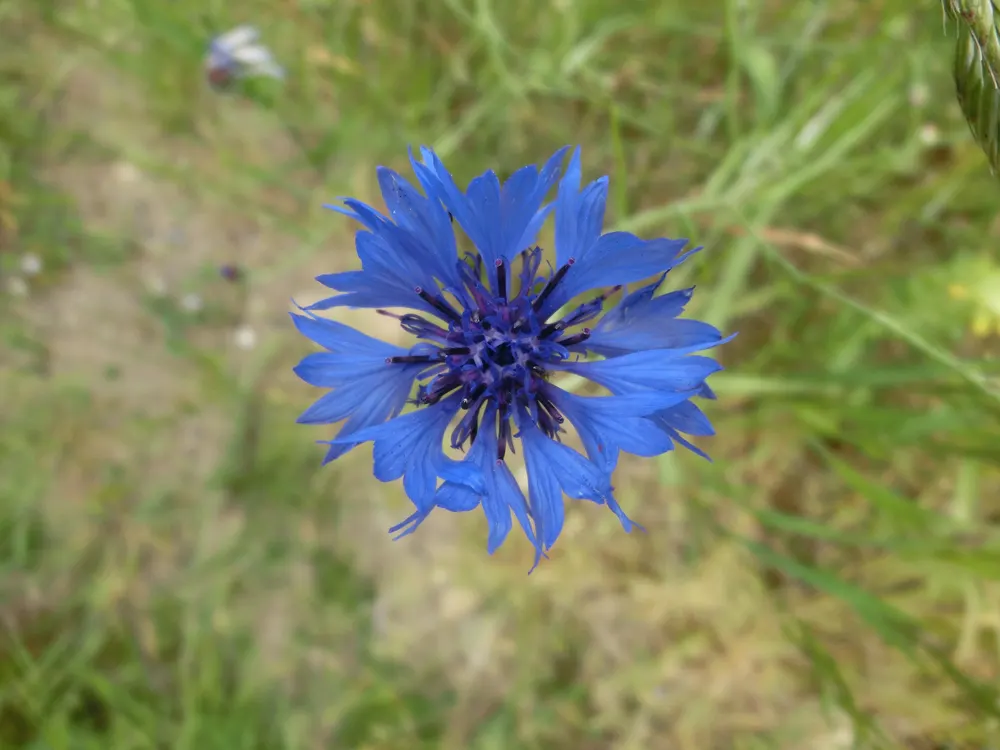
Photo: Orikrin1998, CC BY 3.0 (via Wikimedia Commons)
Cornflower
Centaurea cyanus
Also known as Bachelor's Button, Bluebottle, Blue Cornflower, Basket Flower
Key benefits
✦Traditional uses
✦Cornflower has ridden along in European grain fields for centuries, so entwined with wheat and rye that old herbalists simply called it the cornflower, corn being the old word for any grain. Young men once tucked the blossom into a buttonhole to signal they were courting, and folklore held that if the flower wilted too quickly, the love was doomed to fade just as fast, which is how it earned the name bachelor's button. Herbalists in the German and French countryside dried the petals for teas meant to settle the stomach and brewed cooled infusions to soothe tired eyes after long days in the sun or at close needlework. The vivid blue petals also found their way into inks, dyes, and wine to lend color long before synthetic dyes existed.
How to grow & use it
✦The full apothecary for Cornflower
Traditional remedies and step-by-step preparations, a complete growing guide, and how to harvest, dry, and store it, all unlocked with HerbLens Unlimited.
- ✦Remedies & preparations
- ✦ Growing guide
- ✦Harvest & storage
From under $6 a month. Free plant identifications always included.
- ✦Chamomile
- ✦Elderflower
- ✦Calendula
- ✦Calendula petals
- ✦Rose petals
“For the days you want a touch of true blue on the tea tray and a cool moment for tired eyes.”
Cornflower is Estonia's national flower and once traveled through history as a quiet political symbol, worn by the exiled Prussian royal family and later adopted as an emblem of German unity during the 19th century.
Cornflower petals are commonly eaten as a garnish and are safe in normal amounts, though people sensitive to ragweed, daisies, or chrysanthemums may react to it.